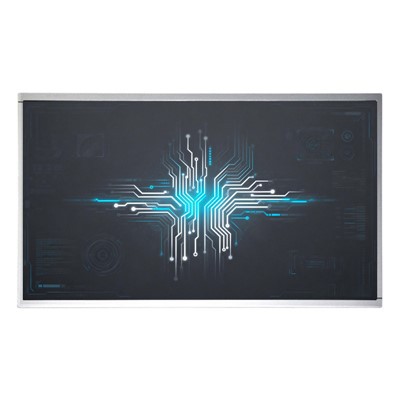
Hey everyone, if you're in industrial automation, manufacturing, or any field where equipment has to survive tough conditions, you've probably dealt with displays that just don't hold up. Dust, extreme temperatures, vibrations, direct sunlight-these things kill regular monitors fast. That's where a rugged touch screen monitor comes in. It's not just a fancy screen; it's built to keep working when everything else fails.


At the heart of every reliable rugged touch screen monitor is the LCD panel. A lot of people focus on the outer shell or the touch tech, but the panel itself has to handle the real abuse. In this post, we'll break down what makes an LCD panel suitable for rugged use, why it matters so much, and how it stacks up against standard consumer screens. Whether you're designing HMI systems, vehicle interfaces, or outdoor kiosks, understanding the LCD side can save you headaches (and money) down the line.
Why Rugged Touch Screen Monitors Are in Such High Demand
Let's start with the basics. A rugged touch screen monitor is designed for harsh environments-think factories, construction sites, military vehicles, mining ops, ports, oil rigs, or even outdoor control panels. These aren't office setups; they're places where screens face constant vibration, shock, temperature swings from freezing to scorching, dust, moisture, and bright sunlight.

Ordinary consumer monitors? They crap out quickly in those conditions. The backlight fades, the panel cracks under vibration, touch stops responding with gloves or dirt, or the whole thing fogs up. That's why industries are shifting hard toward rugged solutions. With Industry 4.0, IoT, and more real-time data on the factory floor, reliable HMIs (human-machine interfaces) are essential. A good rugged touch screen monitor lets operators interact directly-zoom in on schematics, adjust settings, log data-without pulling out a laptop or dealing with failures.
From what I've seen in recent market trends (and trust me, I've dug through plenty of supplier sites and forums), demand is growing fast. Companies like Xenarc, TRU-Vu, Beetronics, and Teguar are pushing models with IP67/IP69K ratings, sunlight-readable brightness (1000+ nits), and wide-temp operation (-30°C to +85°C). These features aren't gimmicks; they're necessities for keeping production lines running or vehicles safe.
What Makes an LCD Panel "Rugged" Enough for These Monitors?
The LCD panel is the soul of the display. In a rugged touch screen monitor, it has to meet specs that consumer panels just ignore. Here's the breakdown of the key requirements:

First, wide temperature range. Standard LCDs operate from about 0°C to 50°C. In a rugged setup, you need -30°C to +85°C or wider. Why? Outdoor equipment in winter or desert heat, engine compartments in vehicles, or cold storage facilities. Panels use special liquid crystals and heaters/dehumidifiers to prevent freezing, condensation, or blackening at extremes.
High brightness is another must. For sunlight readability, we're talking 800–1500 nits or more (compared to 250–400 nits on office monitors). Many use high-power LED backlights with auto-brightness sensors (ALS) that adjust on the fly. Optical bonding is huge here-it glues the touch glass directly to the LCD, killing air gaps that cause reflections and glare. This boosts contrast, cuts reflections by up to 90%, and makes the screen readable even in direct sun.
Durability against shock and vibration comes next. Rugged panels incorporate reinforced structures, shock-absorbing layers, and meet standards like MIL-STD-810 for drops, vibrations, and impacts. The panel itself might use thicker glass or special adhesives to avoid delamination.
Then there's environmental sealing. While the whole monitor enclosure handles IP65/IP67/IP68 (dust-tight, water jets or submersion), the panel contributes with optical bonding to eliminate moisture traps and protective coatings against chemicals, scratches, or fingerprints.
Longevity matters too. Industrial-grade panels aim for MTBF (mean time between failures) of 50,000–70,000+ hours-often 5–8 years of continuous use. They use premium LED backlights (no mercury), wide-viewing IPS or VA panels (178° angles, no color shift), and low-power designs for heat management.
Electromagnetic compatibility (EMI) is key in factories or vehicles with heavy motors. Good panels include shielding to avoid interference.
Touch integration is usually projected capacitive (PCAP) for multi-touch, glove support, and high accuracy-even with thick gloves or wet hands in some models.
Key Technologies That Make Rugged LCD Panels Stand Out
Several advanced processes turn a basic LCD into a rugged beast:

Optical bonding is probably the biggest upgrade. It fills the gap between LCD and touch/cover glass with optically clear resin. This eliminates reflections, improves readability, strengthens against impact, and seals out dust/moisture. Many top rugged touch screen monitors (like those from Xenarc or EIZO) swear by it for military or marine use.
High-bright LED backlights + ALS keep things visible from pitch black to blazing sun. Some add local dimming for better contrast.
Wide-view panels (IPS) ensure colors and clarity from any angle-critical when operators view from the side or above.
Heaters and anti-fog designs prevent condensation in cold/wet environments.
Protective coatings add anti-scratch, anti-glare, anti-fingerprint, or chemical resistance.
For touch, PCAP dominates in rugged setups because it's durable, supports gloves, and works with thick cover glass.
Rugged LCD vs. Consumer LCD: The Clear Gap
Let's put it side by side:

- Operating Temperature - Consumer: 0–50°C; Rugged: -30°C to +85°C (or better)
- Brightness - Consumer: 250–400 nits; Rugged: 800–1500+ nits, sunlight-readable
- Durability - Consumer: Basic plastic bezel; Rugged: Reinforced, shock/vibration tested (MIL-STD)
- Sealing - Consumer: None; Rugged: IP65+ front, often full enclosure
- Lifespan - Consumer: 30,000 hours; Rugged: 50,000–70,000+ hours
- Touch Reliability - Consumer: Bare-finger only; Rugged: Glove-compatible, multi-touch in harsh conditions
- Cost - Consumer: Cheap upfront; Rugged: Higher initial, but way lower long-term TCO (fewer replacements, less downtime)
The math is simple: In a mission-critical setup, one failure can cost thousands in lost production. A proper rugged touch screen monitor pays for itself quickly.
Where the Industry Is Heading
Looking ahead, rugged displays are evolving fast. Industry 4.0 and edge computing mean more data on-site, so higher resolutions (FHD to 4K), better touch precision, and Mini-LED backlights for efficiency are popping up. Low-power designs help with battery-powered or remote setups, and eco standards push for RoHS compliance and mercury-free backlights.

Customization is huge too-sizes from 7" to 32"+, specific mounting (panel, VESA, open-frame), and tailored inputs (HDMI, DisplayPort, VGA legacy support).
Why Partnering with a Reliable LCD Supplier Matters
At the end of the day, 80% of a rugged touch screen monitor's success comes down to the LCD panel quality. Materials, process control, rigorous testing-these aren't things you want to gamble on.
That's where Minghua Display comes in. As a specialized LCD manufacturer, we focus on custom industrial-grade panels tailored for rugged applications. Whether you need wide-temp modules, high-bright optical-bonded solutions, glove-compatible PCAP integration, or full custom sizes/resolutions, we've got the expertise to deliver.
We handle everything from raw panel selection and backlight engineering to protective coatings and long-term supply stability. Our panels power monitors in factories, vehicles, outdoor systems, and more-built to last with MTBF figures that stand up to real-world abuse.
If you're an OEM, integrator, or end-user building rugged touch screen monitors, reach out. We offer free samples for testing, quick prototyping, and flexible MOQs. No cookie-cutter stuff-true customization to match your exact environment and specs. Drop us a message or visit https://www.lcdonsale.com/. Let's talk about how we can make your next project tougher, brighter, and more reliable. Your equipment deserves a panel that won't quit.