

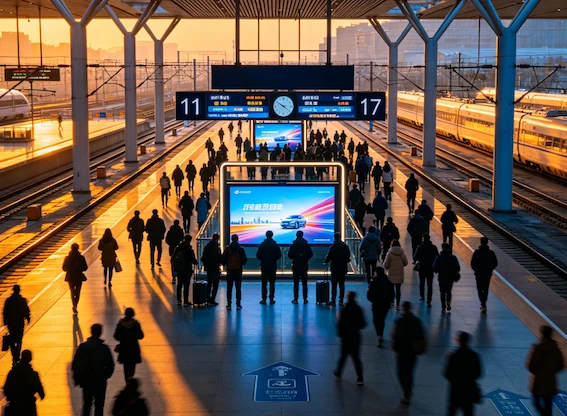
A couple of years back I was walking through Shanghai Hongqiao Railway Station during peak evening rush. Trains were delayed by 15 minutes due to weather, and I watched hundreds of passengers instinctively glance up at the platform screens. The information was crystal clear despite the evening light, the ads on nearby boards kept things from feeling too chaotic, and the wayfinding signs helped people reroute without panic. That's when it hit me how much these displays quietly carry the whole operation. Most of them are powered by open frame displays - rugged open frame LCDs designed to disappear into the station infrastructure.
I've followed transportation display projects for a while now, and railway station open frame display solutions keep coming up as the practical choice for platform screens, digital advertising boards, and passenger guidance. In this piece I'll share what actually works in the field in 2026, based on
Why Open Frame LCDs Fit Railway Stations So Well
Railway stations are tough environments. Trains create constant low-level vibration, thousands of people pass through daily, dust gets everywhere, and the displays need to run around the clock in changing temperatures and lighting. A regular office monitor would struggle here.
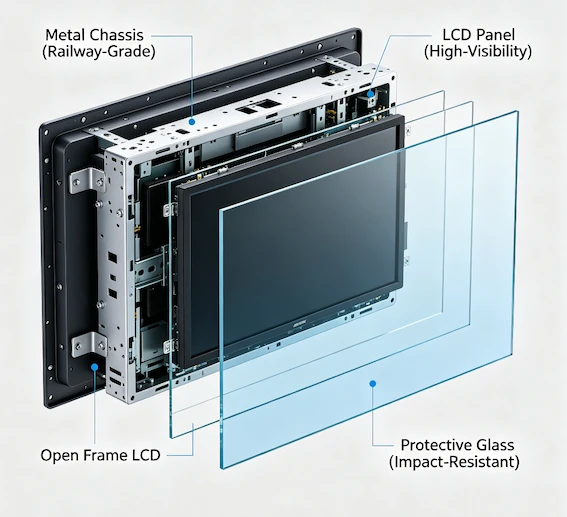
An open frame display (sometimes called open frame monitor or open frame LCD for train station) is basically the guts of a screen - the LCD panel on a strong metal chassis, without the full plastic housing or stand. This bare-bones design lets engineers mount it directly into custom station panels, walls, or enclosures. You get better access for maintenance and more flexibility in how it fits into the overall architecture.
In practice, I've seen teams use them because they can add protective glass or full weatherproofing around the open frame while keeping the front surface flush and clean. It's not flashy technology, but it solves real problems that closed-frame monitors create when you try to force them into station designs.
Real Applications I've Noticed Across Different Stations
On the platforms, open frame displays handle the critical passenger information system (PIS). Real-time train arrivals, departures, platform changes, and safety messages need to be readable from a distance and under varying light. Many installations use 1000–2000 nits brightness models with anti-glare coatings so people can still read them even when sunlight hits the platform.
I remember one mid-sized station upgrade where they replaced older signs with new open frame LCD units. Delays dropped in terms of passenger confusion because the screens stayed visible and updated quickly through the central system.
For advertising and digital billboards, these displays turn station walls into revenue generators. Operators run dynamic content - local promotions, train company ads, or safety campaigns - often across multiple screens working together. The slim profile of open frame solutions makes it easier to create large video walls without thick frames breaking the visual flow.
Wayfinding is another area where they shine. Whether it's static directional signs or interactive kiosks showing maps and transfer options, the railway station open frame display approach allows custom sizes and mounting that fit the station's architecture. In busy transfer hubs, this helps keep foot traffic moving and reduces staff questions.
You'll also spot them in ticket halls, waiting areas, and even control rooms. The common theme is reliability under pressure.
What Actually Makes Them Worth Choosing
After seeing different setups, the biggest win is durability combined with integration flexibility. The metal chassis gives structural strength against vibration (important for EN 61373 standards in rail), while still allowing good airflow to prevent overheating in enclosed spaces.
Maintenance is simpler too. When something needs attention, technicians can access components more easily than with fully sealed units. One operator told me their annual maintenance costs dropped noticeably after switching to properly specified open frame models because fewer complete replacements were needed.
They also help with the overall passenger experience. Clear, bright information reduces stress during disruptions. At the same time, well-placed advertising screens generate extra income without feeling intrusive. In terms of total cost over 5–7 years, they often beat consumer-grade alternatives that fail early in harsh station conditions.
Comparing Options for Station Use
I've looked at closed-frame monitors, fully embedded kits, and open frame solutions side by side for rail projects. Closed-frame units are convenient for quick office installs but usually need heavy modification for station use and don't handle vibration as well. Embedded kits can be very thin but make future servicing trickier.
Open frame displays tend to hit the sweet spot for most railway applications. You get a solid mounting frame, standard connections like HDMI and network ports, and the freedom to work with your enclosure designer. In vibration and temperature testing reports I've reviewed, they consistently perform better for platform and signage roles.
Practical Advice on Picking the Right Display
If you're evaluating open frame display railway platform options, start with the actual environment. Is the screen exposed to direct sunlight? You'll want higher brightness and anti-reflective treatment. Heavy train traffic nearby? Prioritize models with proper rail vibration and shock certifications like EN 50155.
Size matters - common choices range from 32 to 55 inches for platform screens, with resolution at Full HD or 4K depending on viewing distance. Think about whether you need touch capability for interactive wayfinding or just robust non-touch panels.
I always suggest asking for real samples and, if possible, testing them under conditions that match your station. Supplier support and long-term availability of parts also matter more than you might think when the station is operating 18+ hours a day.

Installation and Day-to-Day Reality
Good planning makes a big difference. Work with the civil and electrical teams early so mounting points, cabling, and ventilation are sorted before the displays arrive. Anti-vibration brackets and secure but serviceable cabling are essential.
In daily operation, regular gentle cleaning of the front surface and occasional remote checks through the network keep things reliable. I've seen stations where proactive monitoring caught minor issues weeks before they would have affected passengers.
Stories from Actual Deployments
In one major Chinese high-speed rail station I followed, the upgrade to modern open frame LCD platform displays and wayfinding signs noticeably improved on-time passenger boarding metrics during peak seasons. Staff reported fewer complaints about unclear information, and the advertising system started contributing measurable revenue.
Similar patterns show up in European stations where winter conditions and older infrastructure make reliability critical. The displays that last are usually the ones designed with transport use in mind from the start.
Final Thoughts from the Field
Railway stations in 2026 are complex living systems where information, navigation, and even advertising all need to work together flawlessly. Open frame LCD solutions for platform screens, digital billboards, and wayfinding have proven themselves as a dependable foundation for that.
They're not the most glamorous part of a station upgrade, but they're often one of the smartest investments for long-term smooth operations and better passenger experience.


If you're planning a project and need displays built specifically for your station's challenges, MINGHUA is worth talking to. They focus on custom LCD work, including open frame displays tailored for tough environments like railways. Whether it's adjusting brightness, size, mounting, or full system integration, their team has experience delivering solutions that match real operational needs. Feel free to reach out to them - it's often the conversations with specialists that turn a good plan into one that actually performs day after day.
FAQ
Q: How well do open frame displays handle train vibration?
A: With proper mounting and rail-certified models, they perform very well - far better than standard commercial screens.
Q: Are they suitable for outdoor platforms?
A: Yes, when paired with correct brightness, protective glass, and IP ratings for the front.
Q: What about long-term costs?
A: Most operators see savings after the first couple of years due to lower failure rates and easier repairs.
Q: How do you manage content across many screens in a large station?
A: Modern content management systems integrate easily with open frame displays, allowing centralized scheduling for both information and advertising.
Q: What brightness level is recommended for sunlit platforms?
A: 1000–2500 nits with anti-glare coating is typically needed for good visibility in bright outdoor or semi-outdoor conditions.
Q: Can open frame displays support interactive wayfinding?
A: Yes, many models offer PCAP touch overlays for interactive maps and search functions.
Q: How long do these displays usually last in railway environments?
A: With proper specification and maintenance, quality units often run reliably for 5–8 years or more under 24/7 operation.
Q: Do they require special power or network setup?
A: They use standard interfaces, but planning for stable power and network connectivity during the design phase is important.


