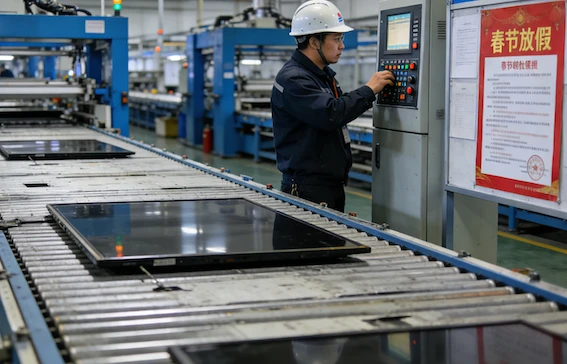
So here's the latest from the TV panel world: the three biggest Chinese players-BOE, TCL CSOT, and HKC-are all planning to dial things way back during the Lunar New Year break in February. According to TrendForce's most recent check-in with the industry, they're going to shut down their module assembly lines (you know, the part where they actually turn the LCD TV panels into finished TV screen panels) for anywhere between 5 and 10 days.
Why? Pretty simple really. Nobody wants to pay full wages to a bunch of workers over the long holiday when factories usually run slow anyway, and the last thing anyone needs is a mountain of extra inventory sitting around when demand normally takes a breather after New Year. To keep everything in sync, they're also going to run the front-end production lines-the ones that actually make the LCD TV screens-at lower speed during the same period.
Because of all this, TrendForce is now forecasting that overall utilization rates for LCD TV panels in the first quarter will drop by roughly 3.5 percentage points compared to the previous quarter, landing somewhere around 87.7%. That's enough to flip the market from "eh, supply is okay" to "actually supply is starting to feel a little tight."
Supply-wise, it's even more noticeable. February is already a short month because of the holiday, and when you layer these planned stoppages on top, the total supply area for TV screen panels is expected to shrink by about 3.8% from the previous quarter.
On the demand side though, things aren't falling off a cliff the way they sometimes do in the slow season. China's government is still pushing the trade-in program hard, giving people 15% off on the most energy-efficient TVs if they swap out their old ones. Plus, brands are already starting to build inventory ahead of the 2026 FIFA World Cup, which should help take some of the sting out of the usual first-quarter slowdown. So instead of a big drop, demand area for LCD TV panels is only expected to ease back by about 1.8% quarter-on-quarter.
Looking out over the rest of 2026, the industry is still very much on the "bigger screens are better" train. That said, the really huge sizes (75-inch and up) might grow a bit more slowly than before-some parts of the market aren't quite as excited about them anymore, and last year's numbers were pretty strong anyway.
What the panel makers are trying to do instead is gently steer the whole market toward bigger but not crazy-big sizes. They're hoping to convince customers to gradually move away from the old 23.6-inch and 32-inch stuff and start buying more 43-inch and 50-inch panels. If that shift keeps happening, the average size of TV screen panels should keep creeping up, and overall demand area should get a nice little boost.
Of course, nothing is guaranteed. The world economy is still kind of all over the place, there's still a lot of geopolitical noise, and memory prices have been going nuts lately-all of which could make people think twice about buying new LCD TV panels later in the year. For the manufacturers, the name of the game in 2026 is probably going to be flexibility: being able to quickly adjust production plans and take orders in whatever way the market suddenly decides to move.
The one piece of genuinely good news? There aren't any big new factories coming online anytime soon, and nobody seems to be rushing to pour hundreds of millions into fresh LCD TV panel capacity. In an industry that's spent years swinging between boom and bust, that lack of new supply actually feels like pretty solid long-term news for prices and for the overall health of the business. Fingers crossed it stays that way.