

You know that moment when you're watching a dark movie scene or testing a new monitor, and you notice these faint, blotchy areas that look like clouds or dirty smudges? Yeah, that's Mura Spot. I've dealt with this issue more times than I care to count - both as someone who reviews displays and while helping clients with custom screen projects.
It's one of those subtle defects that manufacturers don't like talking about, but if you buy enough screens, you'll eventually run into it. In this post, I'm sharing what Mura Spot really is, why it keeps showing up even in 2026 panels, how to check for it, and what you can actually do about it. No marketing nonsense, just real talk from someone who's seen hundreds of panels up close.
My First Real Encounter with Mura Spot
A couple of years back, a client ordered a batch of industrial monitors for a medical imaging setup. Everything looked fine during the daytime demo, but when we tested them in a dark room with a gray background - bam - there were these uneven cloudy patches. Not dead pixels, not bright spots, just this weird "dirty screen" look. That was my proper introduction to Mura Spot, and it taught me that not all defects are obvious right out of the box.
Mura is a Japanese word meaning "unevenness." In displays, it shows up as areas where the brightness or color isn't consistent. You might see large cloudy regions (cloud mura), small circular stains (spot mura), or even streaks. It's different from backlight bleed, which usually glows from the edges. Mura Spot can appear anywhere and is much sneakier.
Why Does Mura Spot Keep Happening?
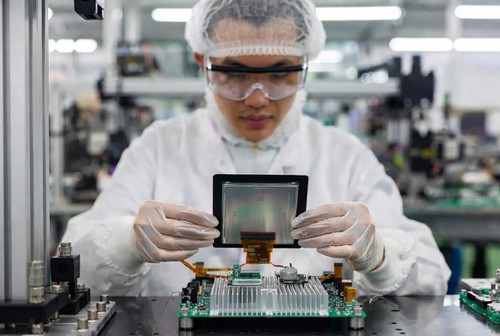
From what I've gathered talking to factory engineers, Mura Spot is mostly a manufacturing headache. During LCD production, even tiny differences in how the liquid crystal is layered, how evenly the backlight spreads, or how much pressure is applied when assembling the panel can cause it.

For OLED screens, it often comes from slight inconsistencies when the organic materials are evaporated onto the glass. Impurities, temperature swings during production, or mechanical stress during shipping and installation can all play a part.
I remember reading about cases where simply how the panel was handled on the production line created spot mura. In 2025 and 2026, bigger glass lines (like G8.6) have helped improve overall uniformity, but as screens get larger and thinner, these tiny variations become more noticeable to our eyes.
It's not necessarily a sign of bad quality control - it's more like an ongoing battle with physics and chemistry in display manufacturing. Even top brands still deal with it to some degree.
How Mura Spot Actually Affects People
For regular users, a mild Mura Spot might not ruin your Netflix binge, but in dark scenes it can be distracting. I've seen Reddit threads where people returned brand-new TVs because of visible clouding during movies.
In professional settings, it's a bigger deal. Medical displays need consistent brightness for accurate readings. Factory control panels with noticeable mura can make operators question what they're seeing. One aviation client I worked with was extremely strict about this - even minor unevenness wasn't acceptable.
How to Actually Check for Mura Spot Yourself
Here's the practical part. You can't always spot Mura Spot just by browsing the web on a bright screen.
Best way: Sit in a completely dark room. Display a full-screen gray image (around 50% brightness) or pure black. Look carefully - move your head a bit, change the brightness levels. If you see consistent cloudy patches or spots that stay in the same place no matter what content is playing, that's likely Mura Spot.
Professional inspectors use special cameras and software (like systems from Radiant Vision) to measure exactly how bad it is. Most factories have acceptance standards, but they're not always shared with consumers.
Pro tip: Test at multiple brightness levels. Sometimes mura only shows up at certain grays.
What Can Be Done About It?
The industry is getting better. Panel makers now use software compensation to adjust pixel voltages and reduce visible unevenness. Better optical films and more precise assembly processes also help.
On the user side, there's not much you can do to "fix" physical mura. Some people claim laying the screen flat for a while helps with pressure-related issues, but results are hit or miss. For new purchases, the best defense is thorough testing during the return window.
When buying, I usually tell people to:
- Read recent user reviews specifically mentioning uniformity or clouding
- Prefer panels from newer production batches
- For important applications, consider industrial-grade options with tighter specs
Clearing Up Common Confusion
People often mix up Mura Spot with backlight bleed or IPS glow. Bleed is usually edge-only and very bright. Mura is more about overall unevenness. IPS glow changes when you move your viewing angle; mura generally doesn't.
Will it get worse over time? Usually not, unless the screen gets physically stressed or overheated.
Final Thoughts from Someone Who Deals with This Stuf
Mura Spot is just part of the reality of current display technology. We're pushing screens to be bigger, thinner, and higher resolution, and perfect uniformity is incredibly difficult to achieve every single time.
The key is understanding what level is acceptable for your use case. A bit of minor mura on a phone is one thing - on a $2000 professional monitor, it's another story.
If you're working on a project where standard off-the-shelf screens aren't cutting it - maybe you need better uniformity, custom sizes, or specific anti-mura treatments - that's where specialized manufacturing comes in.

At Minghua, we specialize in custom LCD solutions. We work directly with clients to develop displays with enhanced uniformity, reduced Mura Spot, and performance tailored to real-world demands - whether it's for medical equipment, industrial controls, or commercial applications. If you're struggling with display quality issues or need something built exactly to your specs, feel free to reach out. No pressure, just honest conversation about what's possible.
Have you run into Mura Spot on your devices? Drop your experience in the comments - I read them all and might be able to offer some specific thoughts.


