

Hey everyone, welcome back to the blog! If you've ever wondered how your TV, monitor, or phone screen actually works, you're in the right place. Today we're diving deep into LCD display technology – the workhorse that's still everywhere in 2025. We'll cover the fundamentals, different panel types, what's happening in the LCD market trends right now, and how big brands like BOE, LG, and Samsung are shaping the future. Let's get started!
1. What Is LCD Display Technology? The Quick Basics
So, LCD stands for Liquid Crystal Display. It's not magic – it's clever science. At its core, an LCD display uses liquid crystals sandwiched between two glass layers. These crystals don't glow on their own; they twist or align when electricity hits them, controlling how light passes through.
The light comes from a backlight (usually LEDs these days), and color filters create the reds, greens, and blues you see. Thin-film transistors (TFT) act like tiny switches for each pixel, making it super precise. That's why we often call them TFT-LCD panels.
This setup gives LCD great advantages: it's reliable, energy-efficient compared to older tech, and way cheaper to produce at scale than OLED for big screens.
Here's a clear diagram showing the layered structure – backlight at the bottom, liquid crystals in the middle, and color filters on top:
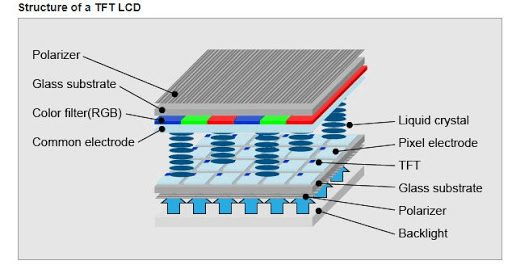
See how everything stacks up? That's the foundation of almost every LCD display you use daily.
The Main LCD Panel Types: TN, VA, and IPS Compared
Not all LCD panels are created equal. The way the liquid crystals are arranged changes everything – from speed to color quality.
- TN (Twisted Nematic) panels are the old-school champs: super fast response times (great for gaming), cheap, but viewing angles stink and colors wash out if you look from the side.
- VA (Vertical Alignment) panels deliver killer contrast – deep blacks that make movies pop – and better colors than TN. They're popular in TVs, but response times can be slower, leading to some ghosting in fast action.
- IPS (In-Plane Switching) is the premium pick: wide viewing angles (up to 178°), accurate colors, and consistent brightness. Perfect for creative work or shared viewing. It's why most pro monitors and high-end phones use IPS LCD.
Check out this side-by-side comparison chart – it really shows the differences in viewing angles and color accuracy:
In 2025, IPS panels are leading the charge in many segments because they balance quality and versatility so well.
How Backlighting and Extras Like Mini-LED Boost Modern LCD
Back in the day, LCDs used bulky fluorescent lamps. Now? LED backlighting rules – thinner, brighter, and more power-efficient.
The latest hot trend is mini-LED backlighting with quantum dots (often called QLED). It creates thousands of tiny dimming zones for better contrast and HDR performance, closing the gap with OLED without the burn-in risk.
Modern LCD TV and monitors with this setup look stunning – vibrant colors, deep blacks, and no halo effect like older edge-lit screens.
Take a look at these examples of current mini-LED and quantum dot-enhanced LCD displays:

Pretty impressive, right? This tech keeps LCD competitive in 2025.
2025 LCD Market Trends: Growth, Challenges, and What's Next
The LCD market trends in 2025 are mixed but mostly positive. The global display market (including LCD) is expected to hit around USD 131-166 billion this year, with steady growth toward 2030 at a CAGR of 3-7% depending on the segment (sources like Mordor Intelligence and MarketsandMarkets).
LCD still dominates large panels, TVs, and automotive thanks to cost and reliability. But OLED is eating into premium areas, so LCD is pushing innovations like flexible screens and AI-enhanced features.
Automotive is a big growth driver – LTPS TFT LCD holds about 45% of car displays in 2025, with bigger, curved dashboards becoming standard.
Here's a glimpse of automotive LCD in action – those infotainment screens are getting huge:

Flexible LCD concepts are also emerging, hinting at foldable future tech:

Overall, LCD market trends point to evolution, not extinction.
Challenges and the Road Ahead for LCD Technology
Big players are busy. BOE (China's giant) dominates large LCD with high-contrast innovations like UB Cell. Samsung and LG balance LCD with OLED but keep investing in premium LCD for TVs and monitors.
AUO and Sharp shine in automotive and commercial displays, while Innolux pushes smart cockpits.
These brands drive LCD industry advancements – from better efficiency to sustainable production.
From car dashboards to digital signage, LCD is everywhere. In homes, it's smart fridges and monitors. In cars, it's clear, sunlight-readable screens. In offices, it's reliable 4K displays.
The versatility keeps LCD king for many uses.
Supply chains can be tricky, and environmental concerns push greener manufacturing. But with flexible and hybrid tech, LCD has a bright future through 2030+.
What do you think – still team LCD, or switching to OLED? Drop your thoughts below!


