

Hey folks, if you're trying to figure out displays for medical stuff or industrial setups, you've probably asked yourself: what's the big deal between a regular industrial LCD (or industrial monitor, industrial TFT LCD) and a proper medical grade monitor (you know, medical LCD display, Medical TFT Displays, medical monitor, or just medical display)? They can look kinda similar at first glance-both are tough LCD screens-but once you get into the details, they're built for totally different jobs.
I've seen a lot of people (engineers, hospital buyers, device makers) scratching their heads over this, wondering if they can just slap an industrial screen into a medical setup to save cash, or why the medical ones cost so much more. So let's walk through it in plain English, no fluff.
What They're Actually Made For
An industrial monitor or industrial TFT LCD is designed to take a beating in rough places. Factories, control panels on machines, outdoor kiosks, boats, military gear-you name it. These things need to run non-stop (24/7 for years), handle crazy temperatures (like -30°C up to 80°C or even wider), shrug off vibrations and shocks, resist dust and splashes (often IP65 or better), and keep working without dying early.

On the other hand, a medical grade monitor is all about helping doctors see tiny details clearly so they don't miss something important. Think radiology rooms reading X-rays, CT scans, MRIs, mammograms, or live feeds during surgery in the OR. The priority isn't surviving a hammer drop-it's making sure every shade of gray shows up exactly right, every single time, no matter how long the screen's been on.
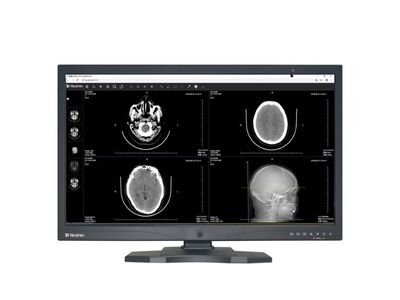
The Image Quality Stuff – This Is Where It Gets Real
Brightness is a good example. Industrial screens can get super bright (500–1000+ nits) for working outside in sunlight, but over time the backlight fades and nobody notices until it's too late. Medical ones start bright enough (usually at least 350–500 cd/m², higher for mammo) and have built-in sensors that auto-adjust so the brightness stays rock-steady for years. That's huge because fading light can hide faint stuff in scans.
Then there's grayscale. Industrial panels might have good contrast, but they don't follow the special curve that makes sure each step in the image data looks equally different to the human eye. Medical displays stick to DICOM Part 14 (the Grayscale Standard Display Function). It's like a universal map so a gray value of 512 always looks the right amount brighter than 256-no matter which compliant screen you're using.
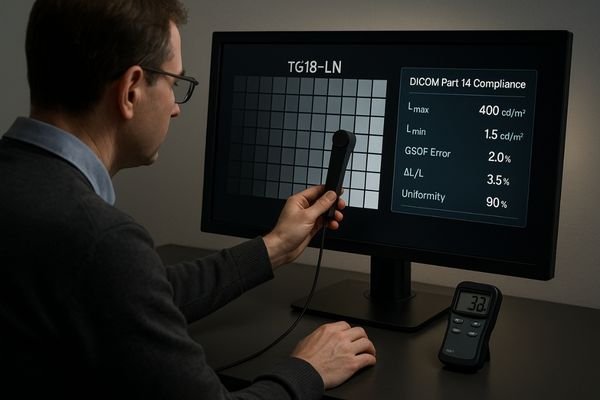
Uniformity matters too. On a cheap or industrial screen, you might see cloudy spots or uneven brightness across the panel (up to 20–30% variation). Medical ones correct that down to under 10–15% so you don't mistake a hot spot for a real abnormality.
Resolution, color accuracy, viewing angles-medical screens often go higher-res (3MP, 5MP, even 12MP for detailed work), wider colors for pathology slides, and hold contrast even if you're looking from the side.
From what I've read in studies and guidelines (like AAPM TG18 and ACR stuff), even fancy consumer or industrial screens don't hold up as well over time for actual diagnosis compared to true medical ones.
The Rules and Paperwork Side
This is probably the biggest wall between them.
Industrial screens usually just need basic safety certs (CE, UL), maybe some rugged ratings. No big medical hoops.
But for a medical grade monitor to be used for real diagnosis? It has to pass serious stuff:
- DICOM Part 14 for that grayscale consistency.
- IEC 60601-1 (and EMC parts) so it's electrically safe around patients-no shocks, no interference.
- FDA 510(k) clearance in the US (Class II device) proving it's safe and actually works for diagnostics.
- In Europe, CE under MDR, plus things like MQSA for mammography, AAPM TG18 tests for quality checks.
If it doesn't have these, you can't legally call it diagnostic-grade, and using it for primary reading could get hospitals in hot water (or worse, miss something on a patient).
Some places use industrial or commercial screens for secondary viewing-like admin work or quick checks-but primary diagnosis almost always needs the real medical deal.
Durability, Cost, and When to Use What
Industrial ones win on raw toughness: vibration-proof, wide temp range, long parts availability. Medical ones are built solid too (fanless, cleanable, sometimes antimicrobial), but the focus is on stable performance plus easy calibration over time.
Price? Medical can be 3–10x more expensive because of all the testing, precision parts, and certs. Lots of smart buyers mix them: industrial for non-critical spots (patient kiosks, carts in hallways), medical for where accuracy really counts (PACS workstations, surgery displays).
In the end, if your job is surviving a factory floor, go industrial. If lives depend on seeing every subtle detail correctly, don't skimp-get the medical monitor that's actually certified for it.
About Minghua Display
Minghua Display has been making custom LCDs for more than 20 years, and we really know our way around both industrial and medical applications. We build everything from rugged industrial TFT LCD and industrial monitor panels that handle extreme environments to full-on medical grade monitor, medical LCD display, and Medical TFT Displays that meet DICOM Part 14, IEC 60601-1, FDA requirements, and more.
We do full customization: pick the best panels, tweak brightness and color, add touch, interfaces, coatings (anti-glare, antimicrobial), and handle certifications so your product passes muster. Our screens are already in medical imaging gear, surgical setups, industrial control systems, and tough portable devices-long-lasting, stable, and with good supply chains so you don't get stuck with sudden EOL notices.
Whether you're prototyping a new machine or scaling up production, we offer competitive pricing, quick samples, and solid support (including calibration help). Drop us a line to talk about your project-we'll work with you to get the perfect display solution that's reliable and fits your budget. Let's chat!


