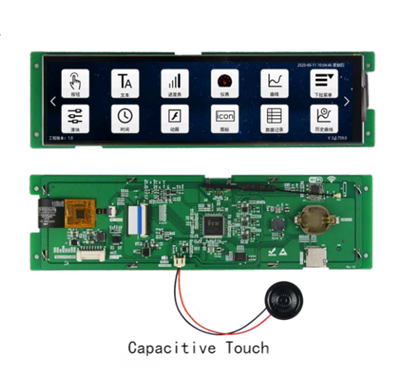
In the realm of display technology, the frame rate of a screen is a crucial parameter that significantly influences the user experience. As a supplier of 12.1 inch UART (Universal Asynchronous Receiver-Transmitter) screens, I am often asked about the frame rate of these displays. In this blog post, I will delve into the concept of frame rate, explain its importance, and discuss the factors that affect the frame rate of a 12.1 inch UART screen.
Understanding Frame Rate
Frame rate refers to the number of individual frames or images that a screen can display per second. It is typically measured in frames per second (fps). A higher frame rate means that the screen can show more frames in a given time, resulting in smoother and more fluid motion. For example, a screen with a frame rate of 60 fps can display 60 distinct frames every second, while a screen with a frame rate of 120 fps can display 120 frames per second.
The human eye can perceive motion more smoothly at higher frame rates. When the frame rate is too low, the motion on the screen may appear choppy or jerky, which can be distracting and even cause eye strain. This is particularly noticeable in applications such as gaming, video playback, and real-time data visualization, where smooth motion is essential for an immersive experience.
Importance of Frame Rate in a 12.1 Inch UART Screen
In a 12.1 inch UART screen, the frame rate plays a vital role in determining the quality of the displayed content. Whether it is used for industrial control, medical equipment, or consumer electronics, a high frame rate ensures that the information is presented clearly and smoothly.
For industrial applications, a 12.1 inch UART screen may be used to display real-time data from sensors, monitors, or control systems. A high frame rate allows the operators to monitor the data accurately and respond quickly to any changes. In medical equipment, such as patient monitors or diagnostic devices, a smooth and clear display is crucial for accurate readings and timely decision-making.
In consumer electronics, a 12.1 inch UART screen may be used in tablets, laptops, or smart appliances. A high frame rate enhances the user experience by providing a more engaging and immersive visual experience. It makes videos look more lifelike, games more responsive, and applications more intuitive to use.
Factors Affecting the Frame Rate of a 12.1 Inch UART Screen
Several factors can affect the frame rate of a 12.1 inch UART screen. Understanding these factors can help in optimizing the performance of the screen and achieving the desired frame rate.
1. Display Resolution
The display resolution of a screen refers to the number of pixels it can display horizontally and vertically. A higher resolution means that the screen can show more detailed images, but it also requires more data to be transmitted and processed. As a result, a screen with a higher resolution may have a lower frame rate compared to a screen with a lower resolution.
For example, a 12.1 inch UART screen with a resolution of 1920x1080 pixels (Full HD) will require more data to be sent to the screen than a screen with a resolution of 800x600 pixels. If the data transfer rate of the UART interface is limited, it may not be able to keep up with the high data demand of the higher resolution screen, resulting in a lower frame rate.
2. UART Data Transfer Rate
The UART interface is used to transmit data between the screen and the host device. The data transfer rate of the UART interface, measured in bits per second (bps), determines how quickly the data can be sent to the screen. A higher data transfer rate allows more data to be transmitted in a given time, which can support a higher frame rate.


However, the UART data transfer rate is limited by several factors, including the baud rate, the number of data bits, the number of stop bits, and the presence of parity bits. The baud rate is the number of signal changes per second, and it determines the maximum data transfer rate of the UART interface. A higher baud rate allows for a higher data transfer rate, but it also requires a more stable and reliable communication channel.
3. Screen Refresh Rate
The screen refresh rate is the rate at which the screen updates the displayed image. It is determined by the hardware of the screen and is typically measured in hertz (Hz). A higher refresh rate means that the screen can update the image more frequently, resulting in a smoother and more fluid motion.
The refresh rate of a 12.1 inch UART screen is usually fixed and cannot be changed by the user. However, the actual frame rate that can be achieved may be limited by the data transfer rate of the UART interface and the processing power of the host device.
4. Host Device Processing Power
The host device, such as a microcontroller or a single-board computer, is responsible for generating the data to be displayed on the screen. The processing power of the host device determines how quickly it can generate and send the data to the screen. If the host device has a low processing power, it may not be able to keep up with the high data demand of the screen, resulting in a lower frame rate.
Achieving the Optimal Frame Rate
To achieve the optimal frame rate for a 12.1 inch UART screen, it is important to consider all the factors mentioned above and make appropriate adjustments. Here are some tips to help optimize the frame rate:
1. Choose the Right Display Resolution
Select a display resolution that balances the need for high-quality images with the data transfer capabilities of the UART interface. If the data transfer rate is limited, a lower resolution may be more suitable to achieve a higher frame rate.
2. Increase the UART Data Transfer Rate
Use a higher baud rate and optimize the UART settings to increase the data transfer rate. However, make sure that the communication channel is stable and reliable to avoid data errors.
3. Select a Screen with a Higher Refresh Rate
If possible, choose a 12.1 inch UART screen with a higher refresh rate to ensure a smoother and more fluid motion.
4. Upgrade the Host Device Processing Power
If the host device has a low processing power, consider upgrading it to a more powerful device to handle the high data demand of the screen.
Our 12.1 Inch UART Screen Offerings
As a leading supplier of 12.1 inch UART screens, we offer a wide range of products with different specifications and features to meet the diverse needs of our customers. Our screens are designed to provide high-quality images, smooth motion, and reliable performance.
In addition to our 12.1 inch UART screens, we also offer other sizes of UART displays, such as the 1.8 Inch UART Display, 6.8 Inch UART Display, and 2.4 Inch UART Display. These displays are suitable for various applications, including industrial control, medical equipment, consumer electronics, and more.
Contact Us for Purchasing and Consultation
If you are interested in our 12.1 inch UART screens or other UART displays, please feel free to contact us for more information. Our team of experts will be happy to assist you in choosing the right product for your specific needs and provide you with professional advice on installation, configuration, and maintenance.
We are committed to providing our customers with high-quality products, excellent service, and competitive prices. Whether you are a small business or a large corporation, we can offer you the customized solutions that meet your requirements. Let's work together to achieve your goals and enhance your projects with our advanced display technology.
References
- Display Technology Handbook, Third Edition, by John P. Fessenden
- UART Communication Basics, by Texas Instruments
- Understanding Frame Rate and Refresh Rate, by DisplayMate Technologies