

February 24, 2026
With humanoid robots starting to pop up more and more, the display industry in Korea is buzzing about a big jump in demand for screens.
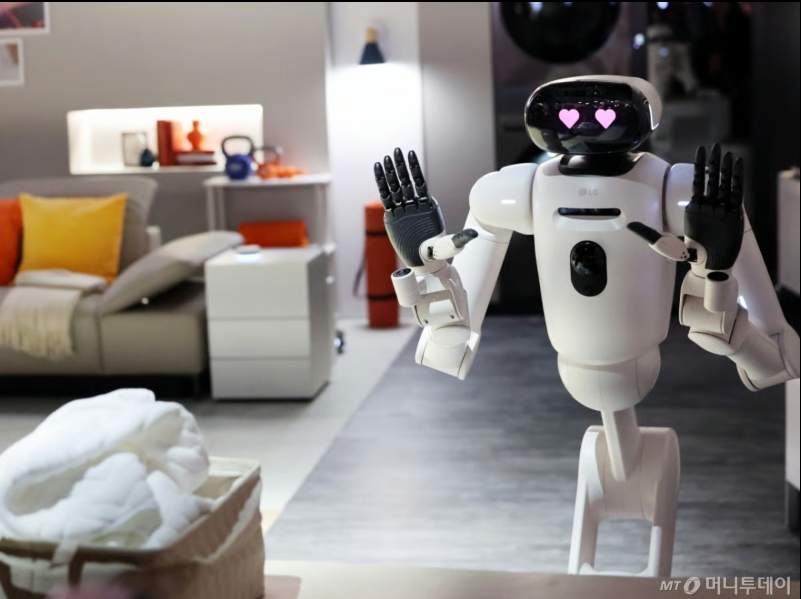
People in the know said on the 22nd that screens are basically the main way these robots talk to us-especially the ones meant for homes. They need to show expressions or visual info, so yeah, a good display is pretty much a must-have.
Morgan Stanley (the US investment bank) is throwing out some huge numbers: they think the whole humanoid robot market could hit $5 trillion by 2050. That's roughly 7,254.5 trillion Korean won. Wild, right?
The catch is that making displays for these robots isn't easy-they need to be super flexible in design and tough enough to handle whatever a robot throws at them. That's where OLED really shines over regular LCD. OLED can bend into curves, circles, spheres, whatever shape the robot needs, so it can look more natural and "human-like." Plus, the picture quality and viewing angles are just way better.
Last month at CES 2026 in Las Vegas, both Samsung Display and LG Display showed off stuff aimed squarely at this AI/robot trend.
Samsung Display brought out this little concept called the "AI OLED Robot." It's got a 13.4-inch (about 340 mm) OLED screen as its "face." The idea is it's like a roaming teaching assistant on a university campus-moving around to help students find classrooms, show directions, professor info, etc. It definitely turned heads.
Samsung's plan is to take the foldable, super-thin OLED tech they've already got for phones and laptops and push it into robots to open up new business. At a CES talk, their CEO Lee Seong-woo basically said robot displays could end up being 10 times bigger than what we see now, because in the AI world, being able to see information matters a ton. They're gearing up with all kinds of options.
LG Display wasn't sitting idle either. They showed a curved 7-inch (177.8 mm) plastic OLED (P-OLED) display designed for humanoid faces. P-OLED is lightweight, really tough against shocks, and bends easily-so it can mimic a more face-like shape.
They even borrowed tech from their car displays: a double-layer OLED setup. Car screens have to survive heat, cold, bright light, and last forever-pretty similar to what robots will need. Stacking two light-emitting layers means it stays bright without fading much, and it handles temperature swings better without weird color shifts.
Overall, Korean display makers are clearly betting big that humanoid robots won't just talk-they'll need expressive, durable faces too. And OLED looks like the go-to tech for that.


