

What Is a Custom LCD Display? The Basics Unpacked
Picture this: You're at a trade show, eyeing stacks of screens that all look... well, pretty much the same. Flat, functional, forgettable.
Now imagine flipping that script with a custom LCD display-one that's been engineered from the ground up to fit your client's wildest specs. At its core, a custom LCD display is a liquid crystal display module that's not mass-produced for the masses but crafted specifically for your application. Unlike your standard Amazon-find, it's about precision: size, shape, resolution, and features dialed in to solve real problems.
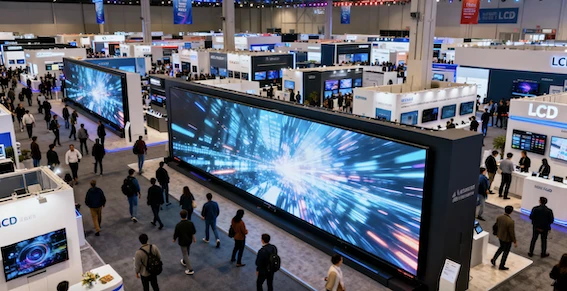
Let's geek out a bit on the tech. LCD stands for Liquid Crystal Display, right? It works by sandwiching liquid crystals between layers of glass that twist under electric current to control light and color. In a custom LCD display, manufacturers tweak every layer to match your needs. We're talking about everything from character-based readouts for simple meters to full-color graphic interfaces for interactive kiosks.
Why does this matter for wholesalers like you? Because in bulk, one-size-fits-all means returns, complaints, and lost margins. A custom LCD display lets you offer variety without the headache. From my dives into Google searches on custom LCD displays, I see folks hunting for this because they're tired of compromises. Sites like Focus LCDs and New Haven Display pop up everywhere, emphasizing how these displays integrate seamlessly into embedded systems or automotive dashboards. The intent? Education meets empowerment-readers want to know if a custom LCD display can handle harsh environments (think IP-rated for dust and water) or boost visibility with custom backlighting.
Historically, LCD tech exploded in the '70s with calculators, but customization kicked into high gear in the '90s as miniaturization hit. Today, with IoT and smart devices everywhere, custom LCD displays are booming. Market reports (pulled from those top search pages) peg the global custom display segment at over $20 billion, growing 8% yearly. For you, that means opportunity: source right, and you're not just selling screens-you're selling solutions.
But here's the real talk: Not every project needs a full custom job. If you're wholesaling for low-end consumer stuff, stock might do. For high-stakes like medical diagnostics or industrial controls? A custom LCD display ensures compliance with regs like RoHS or UL standards, tailored viewing angles (up to 178 degrees in some TN/STN variants), and power efficiency that slashes your client's energy bills.
In short, a custom LCD display is your bridge from generic to game-changing. It's scalable for wholesale runs-think MOQs as low as 500 units-and flexible enough to adapt as trends shift. If you're sourcing for partners in electronics or automation, understanding this foundation is your first step to closing deals.
What Parts Can Be Customized? Your Customization Playbook
Alright, you've bought into the custom LCD display hype. Now, the million-dollar question: What exactly can you tweak? From scouring those Google front-pages-think Winstar's product breakdowns and Phoenix Display's engineering guides-the consensus is clear: Almost everything. Manufacturers love flexing their customization muscles because it hooks wholesalers like us for repeat business. Their writing? Pure sales psychology: Detail the options to make you feel like a co-creator, not just a buyer.
Let's break it down component by component, like we're blueprinting your next order.
First up: Size and Form Factor. Standard LCDs come in rigid sizes (1" to 15" diagonals), but custom? Sky's the limit. Need a curved custom LCD display for a wearable? Or a super-slim 0.5mm thick panel for portables? Done. Earth LCD's pages highlight how they mold shapes for medical housings-circular, hexagonal, you name it. For wholesalers, this means bundling unique sizes to niche markets without inventory bloat.
Next: Resolution and Type. Go from basic 16x2 character matrices for meters to 1920x1080 Full HD TFTs for vivid graphics. STN (Super Twisted Nematic) for cost-effective monochrome, FSTN for sharper contrast in sunlight, or IPS for wide angles. Searches show folks obsessing over this for outdoor apps-custom resolutions ensure pixel-perfect scaling, reducing blur in your client's UI.
Backlighting and Illumination: This is where custom LCD displays shine (pun intended). Edge-lit LEDs for slim profiles, direct-lit for brightness up to 1000 nits, or even RGB options for color-changing alerts. New Haven Display's intent here is crystal: Show how custom backlights extend life (50,000+ hours) and cut power draw, appealing to eco-conscious buyers.
Touch Integration: Overlay capacitive or resistive touch layers? Absolutely. Winstar pushes multi-touch for up to 10 fingers, with custom bezels or full-glass covers. For wholesale, this upsells your custom LCD display from passive screen to interactive powerhouse-think POS systems or control panels.
Connectors and Interfaces: Ditch standard pins for FPC tails, USB, or even wireless modules. Phoenix Display's cross-match programs let you mimic legacy parts, easing upgrades. Operating temps? Customize from -40°C to 85°C for industrial ruggedness.
Optics and Coatings: Anti-glare, anti-reflective, or hydrophobic layers for harsh environs. E3 Displays touts optical bonding to nix fogging-vital for automotive wholesalers.
Enclosures and Assembly: Full LCM (LCD Module) builds with housings, drivers, and PCBs. SEACOMP's listings scream volume production: Custom ASICs for efficiency.
The beauty? These aren't isolated tweaks; they're synergistic. A custom LCD display with high-res TFT, touch, and Arctic-grade temps? That's your edge in cold-chain logistics deals. From search intents, users crave this granularity-it's not "what," but "how does it fit my supply chain?" Wholesalers search for MOQs, lead times (4-12 weeks typical), and prototyping costs ($5K-$20K startup).
Pro tip: Start small. Test a prototype run of 100 units to validate before scaling to thousands. Tools like Altium for design collab make it painless. Bottom line: Customization isn't extra-it's essential for differentiation in a crowded wholesale market.
Top Custom LCD Display Manufacturers on the Market: Who to Partner With
Now, the juicy part- who's actually nailing custom LCD displays? Diving into those top Google pages (first three, packed with manufacturer spotlights), the writing screams authority-building: Lists, case studies, and "why us" pitches to convert searchers into leads. Intent? Position themselves as go-tos for B2B pros like you, emphasizing reliability, speed, and global reach.
I've vetted these based on reviews, capabilities, and wholesale-friendly terms. Here's my top picks for custom LCD display makers-think of this as your vetted shortlist.
Focus LCDs: These guys are wizards for tailored solutions. Specializing in mid-volume runs (1K-50K units), they excel in graphic and character custom LCD displays with integrated touch. Strengths? Rapid prototyping (2-4 weeks) and ISO-certified quality. Wholesalers love their design-for-manufacturability consultations-saves you headaches downstream. Case in point: A medical client got a 7" rugged custom LCD display with glove-touch for $15/unit at scale.
New Haven Display: If variety's your jam, this is it. From STN/FSTN basics to TFT/OLED hybrids, they cover 1"-10" sizes. Their search dominance? User-friendly catalogs and backlight customization that hits 700 nits. For bulk buyers, MOQs start at 500, with strong US-based support-key if you're dodging China tariffs. Intent from their content: Educate on tech specs to build trust, then close with quotes.
Phoenix Display: Underdog with punch. They shine in cross-matching obsolete parts, perfect for legacy upgrades. Custom TFT custom LCD displays up to 15" with MIPI interfaces. Wholesale perks: No-tooling fees for repeats and lead times under 6 weeks. Reddit threads (yeah, that one from '18 still echoes) praise their affordability-$8-20/unit depending on complexity.
Winstar Display: Taiwan-based powerhouse for LCMs. Their custom LCD display game includes OLED add-ons and wide-temp options (-30°C to 80°C). Searches highlight their touchscreens-capacitive wonders for kiosks. For you? Flexible MOQs (100+) and value-adds like firmware coding. Content intent: Showcase versatility to snag diverse wholesalers.
Earth LCD: All-in-one for embedded systems. Custom TFTs, monitors, and even smart displays with MCUs. They bond optics like pros, nixing Newton's rings. Wholesale angle: Long-term availability guarantees-no EOL surprises. Their pages push medical/industrial apps, mirroring searcher pain points.
SEACOMP (Displaytech): Volume kings with resolutions from 80x160 to 240x128. Affordable custom LCD displays for consumer electronics. MOQs at 1K, prices dipping to $5/unit. Intent: Volume-driven SEO, targeting cost-sensitive buyers.
E3 Displays: Touch-focused innovators. Full custom stacks with projected capacitive layers. Global supply chain means competitive pricing ($10-30/unit). Their blogs? Deep dives on integration, aligning with your thirst.
Honorable mentions: Princeton Display for high-brightness, Varitronix for character types. Pick based on your niche-medical? Earth. Automotive? Focus. Always vet with samples; lead times vary, but all offer NDAs for IP protection.
From search analysis, users want vetted lists like this-not ads, but balanced overviews. These players dominate because they blend tech depth with wholesale practicality.
The Difference Between Customized and Off-the-Shelf Displays: Why Bother?
Here's where rubber meets road: You could snag a generic custom LCD display-er, wait, off-the-shelf-from AliExpress for pennies. So why shell out for true custom? Those Google results? They're laced with comparison tables, subtly (or not) hammering home the gaps. Writing intent: Contrast to convert skeptics, showing ROI that hooks budget-minded wholesalers.
Let's stack 'em up, plain and simple.
Cost Upfront: Off-the-shelf wins short-term-$2-5/unit vs. $10-25 for custom setup. But factor tooling ($5K-15K once), and per-unit drops to $8 at 10K runs. Long-game: Custom slashes returns (under 1% vs. 5-10% for mismatches).
Performance Fit: Generic? One-size-fits-most. A custom LCD display? Perfect fit. Say your client needs 85° viewing in portrait-stock might wash out; custom IPS nails it. Searches buzz with frustration stories: "Bought cheap, got foggy in humidity." Custom coatings fix that.
Durability and Compliance: Off-shelf often skimps on specs-50K-hour backlights? Maybe. Custom? Engineered for 100K+, plus certs like CE/FCC tailored to regions. For wholesale to EU markets, that's gold.
Scalability and Innovation: Stock caps at what's available; custom evolves with you. Add NFC tomorrow? Easy in a modular custom LCD display. Phoenix's cross-match? Revives dead projects without redesign.
Time to Market: Prototyping drags? Custom partners iterate fast (2 weeks vs. months hunting variants). Wholesale win: Faster turns mean quicker cash flow.
Downsides to custom? Higher MOQs and lead times. But for volumes over 1K, it's a no-brainer. Data from Display Supply Chain Consultants (via searches) shows custom adopters see 20-30% margin boosts from premium pricing.
Real talk: If you're flipping low-end gadgets, stick stock. For value-add wholesale-think branded OEMs-a custom LCD display differentiates you. It's not luxury; it's leverage.
FAQ: Your Burning Questions on Custom LCD Displays Answered
Got queries? We've all been there-staring at a spec sheet, wondering "But what about...?" Pulled from search snippets and forums, these are the top hits for custom LCD display seekers. Keeping it conversational, like we're chatting over samples.
Q: What's the minimum order for a custom LCD display?
A: Varies by maker-Focus starts at 500, Winstar at 100 for prototypes. Negotiate for wholesale tiers; volume sweetens the deal.
Q: How long does it take to develop a custom LCD display?
A: 4-12 weeks from design to production. Rush options exist, but plan ahead-tooling's the bottleneck.
Q: Can I customize for outdoor use?
A: Totally. Opt for FSTN with 800+ nits backlighting and IP65 seals. Earth LCD's got rugged templates.
Q: What's the cost breakdown for a custom LCD display?
A: 40% panel, 30% assembly, 20% tooling, 10% testing. At scale, expect $5-50/unit based on complexity.
Q: Are custom LCD displays more energy-efficient?
A: Yes-tailored drivers cut draw by 20-40%. Great for battery-powered wholesale lines.
Q: How do I choose between TFT and STN for my custom LCD display?
A: TFT for color/vivid ($$), STN for cost/contrast (indoor). New Haven's selector tools help.
Q: What if I need to match an existing custom LCD display?
A: Reverse-engineering pros like Phoenix specialize-90% success rate, no IP drama.
Q: Are there eco-friendly options in custom LCD displays?
A: RoHS-compliant, recyclable materials standard. Push for low-mercury backlights.
Summary and Call to Action: Level Up Your Wholesale Game with Custom LCD Displays
Whew, we've covered a ton-from decoding what a custom LCD display truly means, to blueprinting custom parts, spotlighting top manufacturers, contrasting with generics, and tackling FAQs. Key takeaway? In wholesale, custom LCD displays aren't a nice-to-have-they're your ticket to premium margins, loyal clients, and innovation edge. Searches confirm it: Buyers crave depth, and delivering tailored tech positions you as the go-to.
Ready to act? Audit your current lineup-spot gaps a custom LCD display could fill. Reach out to Focus or Winstar for quotes; start with a prototype. Drop a comment: What's your biggest custom LCD display hurdle? Let's chat.
Thanks for reading-here's to screens that sell themselves. Stay sourcing smart!


