

What's up, folks? If you're spending hours in front of a computer like I do, chances are you've got a tft monitor or a tft lcd display sitting there. Maybe it's a nice tft lcd color monitor for editing photos or a big tft screen for gaming marathons. But honestly, do you ever wonder what's really going on inside that flat panel to make all those pictures pop?
I've been curious about this for a while, especially when upgrading my setup, so I figured I'd share what I've learned. We're talking about the basic setup and how tft screens work – keeping it straightforward, like explaining it to a friend over coffee. TFT stands for Thin-Film Transistor, and it's the tech behind pretty much every modern LCD out there. Let's get into it.
So, What Is a TFT LCD Display, Really?
In simple words, a tft lcd display is an LCD screen that uses super tiny transistors to control each pixel on its own. Older LCDs, like on ancient calculators or watches, were "passive" and kinda slow and fuzzy. But tft screens are "active-matrix," which means they flip pixels on and off really quick for sharp, smooth images.
Pretty much any tft monitor you pick up today – for your desktop, laptop, or even a big TV – runs on this. It's why your tft lcd color monitor can handle millions of colors without looking dull or washed out. They're affordable, reliable, and used everywhere from phones to industrial stuff.

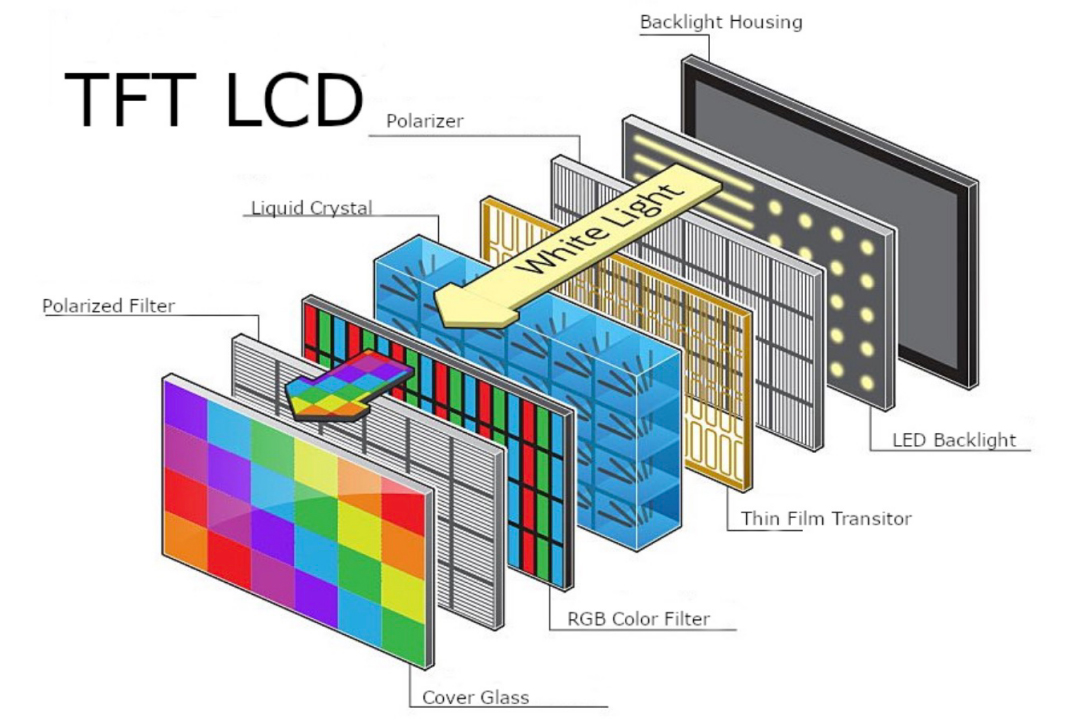
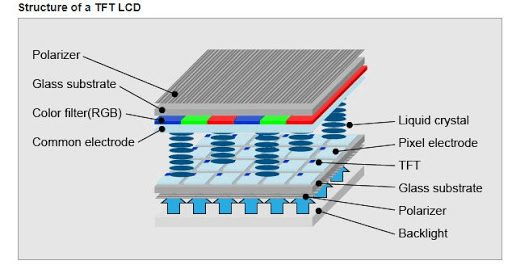
These cross-section diagrams give a good look at the layers in a typical tft lcd display. You can see how everything's stacked up super thin.
Breaking Down the Layers – It's Like a Tech Sandwich

Your tft screen is built from a bunch of thin layers working together. Starting from the back:
- The backlight, usually LEDs these days, shining white light forward (LCDs don't make light on their own).
- A rear polarizer to line up the light in one direction.
- The TFT layer on glass with all those tiny transistors.
- The liquid crystal stuff in the middle.
- Color filters for red, green, blue.
- Front polarizer and protective glass.
Here are some shots showing the backlight and how color filters turn that white light into colors on a tft lcd color monitor.
And up close on pixels:
Those microscope views of RGB subpixels and the transistor setup are wild – that's what's making your tft monitor look so detailed.
How the Whole Thing Works – The Step-by-Step
Taking a common twisted nematic (TN) tft lcd display as an example:
- Backlight sends out white light.
- Rear polarizer filters it to go vertically.
- No voltage? Liquid crystals twist the light 90 degrees, so it passes the front polarizer – pixel looks bright.
- Voltage on (from the TFT transistor)? Crystals straighten, light doesn't twist, gets blocked – pixel dark.
Colors come from mixing those red, green, blue subpixels at different levels.

These diagrams show the light twisting (or not) in on and off states – makes the polarization thing click.
The screen scans rows fast, but it all blends into a steady picture for us.
The Different Panel Types – TN, IPS, VA
Tft screens aren't all the same; it depends on how the crystals are aligned:
- TN: Quick response, cheaper, but colors and angles aren't great if you're not straight on.
- IPS: Awesome colors, wide angles – my go-to for most tft monitors.
- VA: Deep blacks and contrast, solid for movies or dark rooms.
These comparison charts really show the difference in viewing angles – TN washes out bad, while IPS stays consistent.
Why TFT Monitors Are Still Awesome in 2025
OLED gets all the buzz, but tft lcd displays are hanging in there strong. They're brighter for daytime use, no burn-in worries, and cheaper for bigger sizes. Newer ones with Mini-LED backlights look incredible now.
Good points: Crisp images, quick response, save power, thin design.
Downsides: Blacks not as deep as OLED, sometimes backlight bleed on budget ones.
For everyday stuff – work, gaming, streaming – a solid tft lcd color monitor does the job perfectly.
Final Thoughts
That's the rundown on tft screens without getting too technical. Hope these diagrams help visualize it better. Next time you're eyeing a new tft monitor, check the panel type and remember all this is happening behind the glass.
What tft lcd display are you rocking right now? TN for speed, IPS for colors? Drop a comment – always cool to hear. If you want tips on picking one, just say!
Minghua Display Co., Ltd. specializes in premium LCD display customization and sales, offering everything from small monochrome screens to large full-color TFT LCD modules. Our products deliver sharp images, vibrant colors, fast response, and are widely used in industrial control, medical equipment, smart home, and security monitoring. Key advantages: wide viewing angles, low power consumption, durability, and full support for custom sizes, interfaces, and touch integration. With expert technology, strict quality control, and excellent service, Minghua helps your projects succeed efficiently. Choose Minghua for a superior visual experience! Inquiries welcome.


