

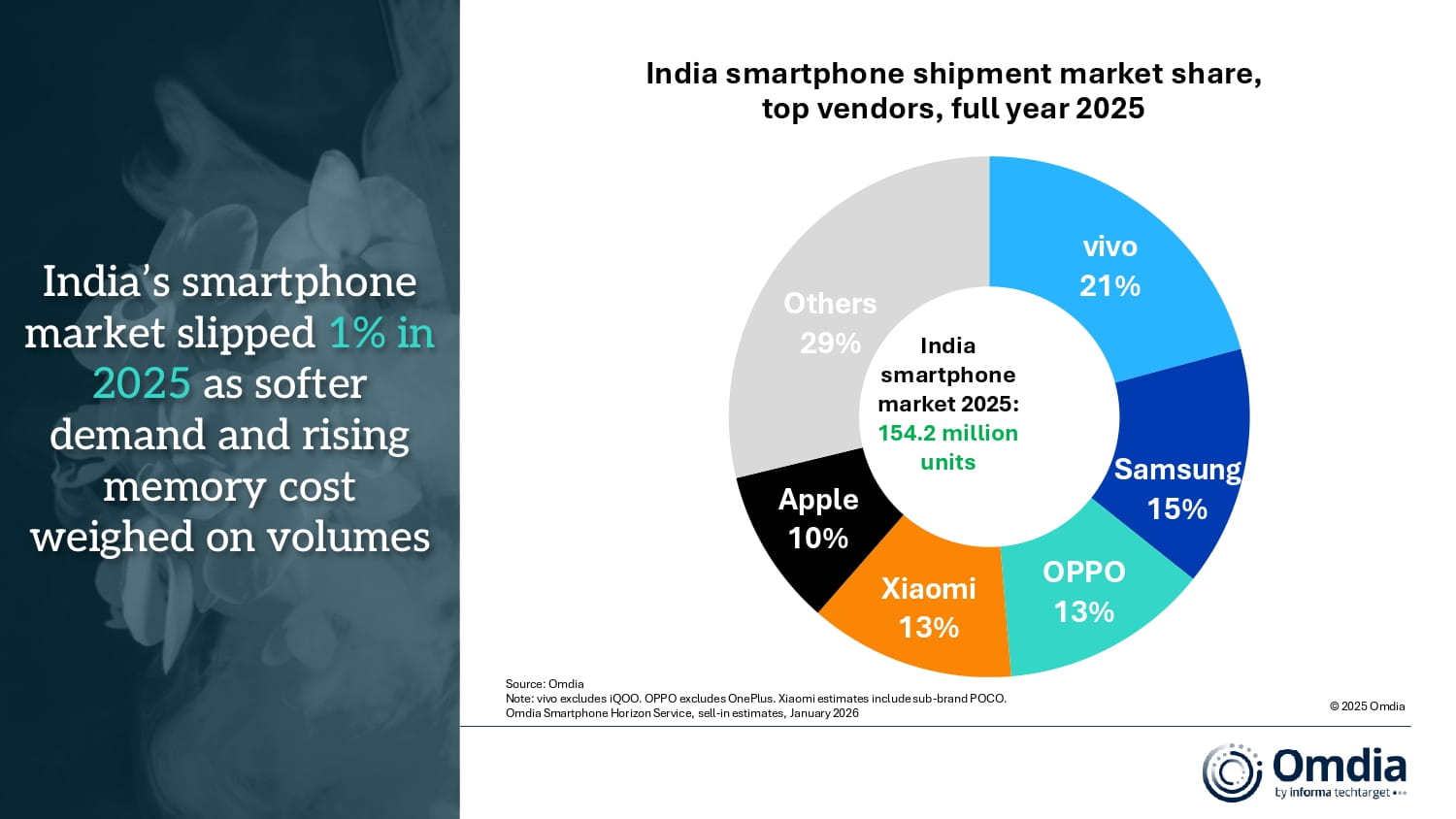
India's smartphone market has cooled off noticeably after years of rapid expansion. In 2025, total shipments stayed almost flat at around 152 million units, showing little to no growth compared to 2024. But here's the interesting part - the overall market value still rose by roughly 8%, mainly because more buyers are moving toward mid-range and premium phones rather than super cheap ones.
Premium Phones Are Gaining Ground
The clear trend right now is premiumization. A growing number of Indian consumers are willing to spend more on better cameras, smoother performance, and nicer screens, especially in the ₹25,000 to ₹45,000+ range. Apple benefited a lot from this shift - the iPhone 16 series performed strongly, helping the company reach its highest-ever value share in India (around 28%). In some quarters, Apple even broke into the top 5 brands by volume.
Looking at overall volume share in 2025:
- Vivo (excluding iQOO) held onto the top spot with about 19–20%, thanks to strong mid-range models and solid offline distribution.
- Samsung came in second at roughly 14–15%, balancing its budget A/M/F series with some premium Galaxy offerings.
- OPPO (excluding OnePlus) sat at around 13%.
- Xiaomi lost some ground, while Realme and others competed in the lower segments.
LCD Displays Still Rule the Affordable Segment
Even with premium phones grabbing attention, LCD display technology remains extremely important for the Indian market, especially in budget and entry-level smartphones. Many popular models under ₹15,000–20,000 still rely on TFT LCD panels, custom LCD displays, and LCD touchscreen modules because they offer a great balance of cost, brightness in outdoor conditions, and reliability.
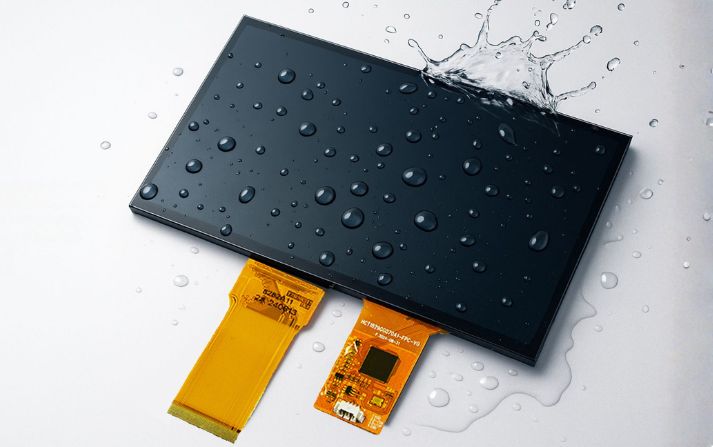
For manufacturers and suppliers, custom LCD solutions are particularly valuable. Brands often need tailored LCD display modules to fit specific phone designs, keep production costs low, and meet the huge demand from first-time buyers and mass-market consumers. While OLED is growing fast in mid-to-premium phones for richer colors and better contrast, LCD smartphone displays (including TFT-LCD) still account for a significant portion of the market - often over 50% in volume terms for India. This makes custom LCD and TFT LCD panels for smartphones key components for keeping devices affordable amid rising overall prices.
India's own TFT LCD panel market is also expanding steadily, driven by local smartphone manufacturing growth and government push for domestic production.
Challenges Ahead in 2026
2026 has started on a soft note. Early data showed smartphone sales down about 9% year-on-year in the first couple of months. Analysts now forecast a full-year decline of 8–15% in shipments - one of the sharper drops in recent years.
The main pressures include:
- Global shortages and higher costs for memory chips (DRAM/NAND), which push up phone prices.
- Cautious spending by consumers facing economic uncertainty.
- People holding onto their old phones longer because upgrades feel less compelling at higher prices.
The budget segment is feeling the biggest squeeze, while premium models from Apple, Samsung, and high-end Vivo/OPPO are proving more resilient.
Outlook and Opportunities
For the display industry, this environment actually creates steady demand for LCD touchscreen displays and custom LCD modules. As brands work hard to control costs, many will continue depending on affordable TFT LCD solutions for their mass-market lineups instead of switching everything to more expensive OLED.


Over the longer term (toward 2030), India's smartphone market should still see revenue growth of around 5–6% per year, supported by wider 5G adoption, better financing, and ongoing upgrades. But 2026 looks like a transitional, tougher year where smart supply chain choices - especially around LCD display technology - will make a real difference.
If you supply or manufacture custom LCD, TFT LCD panels, or LCD display modules for smartphones, India's massive volume in the affordable segment still offers solid opportunities despite the overall slowdown.
Want me to expand on any specific part, like brand strategies, regional differences inside India, or more details on LCD vs OLED trends? Just let me know!


