

Hey everyone, if you've ever worked on military projects, you know that the display can make or break a system. I've seen situations where a vehicle crew in the desert couldn't read their screen because the sun washed everything out, or a unit sitting in freezing conditions refused to boot up properly. These kinds of problems are exactly why military LCD technology puts so much emphasis on three big areas: high brightness, solid sunlight readability, and wide temperature performance.

Here's a practical breakdown of how these features actually work and what really matters when you're choosing military LCD displays.
Why These Three Features Are Non-Negotiable
Military operations don't happen in nice, controlled environments. You've got vehicles bouncing across rough terrain in direct sunlight, aircraft moving between extreme altitudes and temperatures, and ground teams working from scorching deserts to sub-zero conditions.

A standard commercial screen might look fine in an office, but put it in real field conditions and it quickly becomes useless. That's where military LCD displays come in. They need enough brightness to cut through glare, special optical treatments to stay readable, and the ability to keep working reliably when temperatures swing wildly. Without these capabilities, operators lose critical information at the worst possible time.
How High Brightness Works in Military LCD Displays
Most quality high brightness military LCD displays today push 1,000 to 2,500 nits or more. That's several times brighter than your typical laptop screen.

Manufacturers get there by using stronger LED backlights and smarter optical designs. Some are now moving toward Mini-LED arrays because they can deliver higher brightness while offering better control over different areas of the screen.
The tricky part is heat. More brightness means more power and more heat, especially when the whole unit is sealed inside a rugged housing. The better designs manage this balance well so the display doesn't cook itself or drain the system's power too fast.
What Makes a Display Truly Sunlight Readable
Brightness is only half the story. A genuinely sunlight readable military LCD also needs to fight reflections and maintain contrast when sunlight hits the screen.
The biggest game-changer here is optical bonding - basically gluing the layers together with a special clear material instead of leaving an air gap. This reduces internal reflections a lot, improves contrast, and makes the whole screen tougher against vibration and impact.
Good displays also use anti-reflective coatings, anti-glare surfaces, and carefully chosen films. I've heard from people using these in the field that the difference is night and day - you can actually read maps and data instead of seeing your own reflection.
Wide Temperature Performance – Staying Alive in Extreme Conditions
Wide temperature military LCD displays are expected to work reliably from -30°C to +85°C in most cases, with some specialized ones going from -40°C to +105°C.
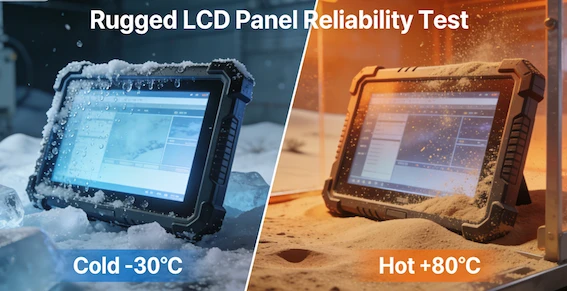
This requires several things:
- Special liquid crystal fluid that doesn't get thick or slow in the cold
- Backlights that don't dim too much in low temperatures
- Built-in heating systems for quick cold starts
- Solid thermal design to handle high heat without damage
These displays also need to survive sudden temperature shocks - something that happens all the time in aviation and desert operations.
How All Three Technologies Come Together
The best military LCD displays don't treat these features separately. They're designed as one system. Optical bonding helps with both readability and durability. The backlight system is built to handle temperature swings while delivering high brightness. Good thermal management ties everything together.
You see this combination in vehicle-mounted displays that stay visible in bright daylight, portable units used by special forces, and cockpit screens that must perform across huge changes in altitude and temperature.
Practical Tips When Choosing Military LCD Displays
 When looking at high brightness military LCD options, here's what I suggest focusing on:
- Real brightness numbers measured under load, not just peak lab results
- How well the screen performs in actual sunlight (ask for outdoor test videos if possible)
- True operating temperature range with real test data
- Power draw at different brightness levels
- Whether it needs NVIS compatibility for night ops
- Quality of the test reports and long-term support
Don't just go by spec sheets. Try to get real feedback from people who've used the displays in similar environments.
What's Changing in Military LCD Technology Lately
Right now in 2026, we're seeing more use of Mini-LED backlights for better efficiency. There's also steady progress in reducing power consumption while keeping high brightness, and making these displays lighter for portable and airborne use. These improvements are slowly making high-performance sunlight readable military LCD solutions more accessible.
Final Thoughts
High brightness, sunlight readability, and wide temperature performance have become baseline requirements for serious military LCD applications. When these features are done right, they give operators clear, usable information even in the harshest conditions.

If you're working on a project that needs custom high brightness military LCD displays with strong sunlight readability and wide temperature performance, Minghua is worth considering. They specialize in custom LCD solutions and can build military-grade displays tailored to your exact requirements - whether that's specific dimensions, brightness levels, interfaces, or environmental needs - while keeping long-term supply and cost-effectiveness in mind.
Would love to hear about your experiences with military displays in the comments. What's been your biggest challenge when selecting screens for tough environments?


