

Hey there! If you've ever tried checking a regular screen on a forklift in broad daylight, at a busy port, or out in the yard under the blazing sun, you know the frustration. Everything washes out, colors fade, and you end up squinting or shielding the display with your hand. That's why high brightness LCD screens exist - they're built exactly for these tough, sun-drenched environments.
In this post, we're diving deep into what makes a high brightness LCD monitor or high brightness LCD panel truly readable outdoors. We'll cover the nits you actually need (spoiler: it's not always "the higher the better"), compare real-world tech like 800–1500 nits high-bright backlights, transflective (semi-reflective) panels, optical bonding, and anti-glare coatings. I'll explain the practical differences with everyday examples from industrial use, so you can pick the right solution without wasting money on overkill.
Why Standard LCDs Fail in Sunlight (And Why Nits Matter)
Normal indoor monitors sit around 250–400 nits - fine for office work, but useless outside. Direct sunlight hits around 30,000–100,000 lux (roughly 10,000–30,000 nits equivalent ambient brightness), so your screen has to fight that hard to stay visible.
For real-world high brightness LCD applications like forklift terminals, port cranes, outdoor kiosks, or marine equipment, the minimum is usually 800 nits. Below that, even with tricks, readability drops off fast in full sun. Many industrial users start seeing decent results at 1000 nits, and for constant direct exposure (think harbors or construction sites), 1200–1500 nits is the sweet spot for most pros.

800 Nits: The Entry-Level for Sunlight-Readable High Brightness LCD
If your setup is in partial shade, under a canopy, or you mostly use it early morning/late afternoon, 800 nits can work surprisingly well - especially when combined with other features. It's the most common starting point for many forklift and warehouse terminals.
Pros: Lower power draw (important for battery-powered vehicles), less heat, cheaper upfront cost. Cons: In peak midday sun, contrast can suffer - text might look washed out unless you add anti-glare.
In practice, many forklift operators say 800-nit high brightness LCD monitors are "good enough" for shaded docks or indoor-outdoor transitions, but they push the limits in open ports.

1000–1200 Nits: The Reliable Choice for Most Industrial High Brightness LCD Screens
This is where most serious outdoor/industrial buyers land. 1000–1200 nits high brightness LCD panels give you solid readability in direct sunlight without going overboard on power or cost.
Why it works: You maintain a contrast ratio of at least 5:1 (the minimum for legible text), even when ambient light is intense. Forklift drivers and port workers report much fewer complaints - numbers, maps, and alerts stay crisp.
Many suppliers (like Xenarc, Acnodes, or Advantech) push 1000-nit models as "sunlight readable" standards for harsh environments.
1500 Nits and Beyond: When You Need Overkill for Extreme Conditions
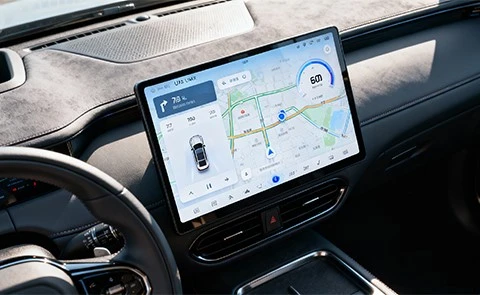
If your high brightness LCD lives in constant direct sunlight - think open harbor cranes, desert oil fields, or equatorial ports - go for 1500 nits or higher. Some go up to 2000–5000 nits for extreme cases, but that's rare and power-hungry.
The jump from 1000 to 1500 nits makes a big difference in glare-heavy spots. You get better contrast, less eye strain for operators, and longer usability without auto-dimming.
But remember: Higher nits = more heat and power. For forklifts, it can drain batteries faster unless you have good cooling.
Transflective vs. Pure High Brightness: Which Wins in Real Outdoor Use?
There's another way besides cranking up the backlight: transflective (semi-reflective) LCD technology.
- High brightness LCD (pure transmissive): Relies on super-strong backlight. Great colors indoors, but eats power and generates heat.
- Transflective: Uses ambient light to reflect back, like a mirror, while the backlight helps in dark. In bright sun, it actually gets better as light increases - low power, low heat, amazing for variable lighting.
In forklift/port tests, transflective panels (often 500–800 nits backlight) outperform pure 1000-nit high brightness in strong sun for readability and battery life. But colors look a bit washed out indoors, and they're pricier to make.
Many choose hybrid: transflective + moderate high brightness for the best of both worlds.

Optical Bonding: The Game-Changer for Reducing Reflections
Air gaps between glass layers cause internal reflections - that's why cheap screens look milky in sun.
Optical bonding glues the LCD to the cover glass with transparent adhesive, killing those reflections. Result? Up to 75–90% less glare, higher contrast, better touch accuracy (if touch-enabled), and more durability against dust/moisture.
In industrial high brightness LCD monitors, bonding turns a good 1000-nit panel into a truly outdoor beast. Without it, even 1500 nits can struggle with mirror-like reflections.

Anti-Glare (AG) Coating: The Final Layer for Comfort
On top of bonding, anti-glare coatings scatter light instead of letting it bounce straight back. AG reduces specular glare (shiny spots) without killing sharpness too much.
Combined with high brightness, it makes long-shift work bearable - operators don't get headaches from glare.
AR (anti-reflective) coatings are similar but focus on transmission; AF (anti-fingerprint) adds oil resistance for touch screens.
Wrapping It Up: Pick Based on Your Real Environment
So, quick guide for high brightness LCD in tough spots:
- Partial shade/forklift indoors-outdoors: 800–1000 nits + AG coating.
- Direct sun/port/crane: 1200–1500 nits + optical bonding.
- Variable light + battery concern: Consider transflective or hybrid. Always test in your actual conditions - what looks great in the showroom can disappoint outside.
If you're shopping for reliable high brightness LCD panels or high brightness LCD monitors for outdoor industrial use, Minghua Display has been specializing in these for years. They offer a full range from 800 nits entry-level to 2000+ nits extreme models, with options for optical bonding, anti-glare/anti-reflective coatings, transflective tech, and custom sizes for forklifts, ports, marine, and more.
What sets Minghua apart? Their panels are built tough - wide temp range (-30°C to +80°C), vibration/shock resistance, long lifespan (50,000+ hours), and they support full customization: touch, interfaces (HDMI/VGA/USB), IP65/67 waterproofing, and even low-power designs for battery vehicles. Many customers in logistics and ports choose them because of reliable sunlight readability without insane power bills.
Plus, their team helps with real-site testing and integration - no guesswork. If you're tired of washed-out screens killing productivity, drop them a line at https://www.lcdonsale.com/ or contact them. They've got stock and quick turnaround for most industrial high brightness LCD needs. Worth checking out if you're upgrading your fleet this year!


