

If you're working on custom industrial LCD projects, you've probably heard horror stories about EMC testing. A display that looks perfect in the lab suddenly starts flickering or resets when you zap it with static or put it near a big motor on the factory floor. Electromagnetic compatibility (EMC) isn't the most exciting topic, but for industrial TFT LCD modules used in automation, medical gear, or outdoor equipment, it's make-or-break.

I've seen plenty of projects where teams focused only on brightness and temperature range, then got stuck for weeks fixing EMC issues during certification. The good news? Most problems are predictable and can be tackled early in the custom industrial LCD development process.
Why EMC Is a Big Deal for Industrial LCDs
Industrial environments are noisy - think welding machines, variable frequency drives, and heavy machinery pumping out interference all day. A regular consumer screen might survive an office, but in a real factory, your custom TFT LCD can show snow, ghosting, touch failures, or even cause the whole system to reboot.

EMC covers two sides:
- Emissions (EMI): How much noise your display throws out.
- Immunity (EMS): How well it shrugs off external interference.
For industrial LCD customization, you want the display to keep working normally even under stress - that's usually called Performance Criterion A (no degradation during or after the test).
Key Standards You'll Run Into
Most custom industrial LCD modules fall under the generic industrial standard IEC/EN 61000-6-2 for immunity. On the emissions side, it's often IEC/EN 61000-6-4 or EN 55032 if the final product is treated as multimedia equipment.
The real work happens in the basic test methods from the IEC 61000-4 series. Here are the ones that bite industrial TFT LCD projects the most:
- ESD (IEC 61000-4-2): Electrostatic discharge. For heavy industrial use, Level 4 is common - ±8 kV contact discharge and ±15 kV air discharge. Many displays pass at ±6 kV but fail at ±8 kV, showing blue screens, stripes, or total lock-up.
- Radiated RF Immunity (IEC 61000-4-3): Usually tested at 10 V/m from 80 MHz to 6 GHz. The screen shouldn't flicker or lose image when hit with strong radio fields.
- EFT/Burst (IEC 61000-4-4): Simulates switching noise - ±2–4 kV on power lines and ±1 kV on signal lines. This one often causes temporary driver resets in LCD modules.
- Surge, Conducted RF, and Voltage Dips: These check what happens during power spikes or brownouts.
In practice, industrial customers frequently push for Level 3 or Level 4 severity because the environment is harsher than a normal office.
Real EMC Test Items and What Usually Goes Wrong
Emissions Testing Labs measure conducted noise on cables (150 kHz–30 MHz) and radiated emissions (30 MHz up to 6 GHz+). Long FPC cables, high-speed LVDS/MIPI signals, and PWM backlight dimming are classic noise sources. If harmonics spike, you fail Class A limits.
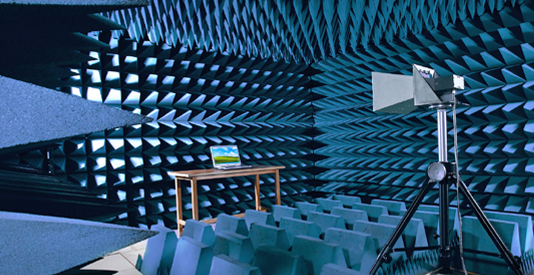
Immunity Testing
- ESD is the most common headache. Real examples: an industrial display passes ±6 kV contact but crashes at ±8 kV air discharge on the enclosure or connectors. Touch panels are especially sensitive - you might see false touches or complete loss of response.
- Radiated immunity at 10 V/m can make the image flicker if grounding or shielding is weak.
- EFT often resets the driver IC during fast transients.
From what suppliers and labs report, first-round failure rates for new custom industrial LCD designs are pretty high - often 50-70% on ESD or radiated emissions - mainly because of layout issues or insufficient filtering.
Practical Design Fixes That Actually Work
Here's what experienced teams do differently:
- Use multi-layer FPC with solid ground planes and keep high-speed traces short and shielded.
- Add ferrite beads, common-mode chokes, or TVS diodes near sensitive points.
- Ensure good grounding between the LCD, metal housing, and main board - ground loops are a silent killer.
- Tune backlight PWM frequency to avoid overlapping with sensitive bands.
- Run early pre-compliance tests with near-field probes. Catching a problem here can save you from a full lab re-test that costs thousands.
One supplier I know reduced ESD failures dramatically just by adding conductive gaskets and improving enclosure-to-PCB grounding paths.
How the Certification Process Usually Plays Out
You pick the standards based on your market (CE for Europe, FCC Part 15 Class A in the US, etc.), prepare a full system sample (host board + custom industrial LCD + cables + enclosure), and send it to an accredited lab like TÜV, SGS, or UL.

A complete EMC test suite typically takes 2–6 weeks in the lab, plus time for fixes if you fail. Costs can range from a few thousand dollars for basic checks up to $10,000–$20,000+ for a full industrial package with multiple iterations. Pre-compliance testing early on is cheap insurance - it often pays for itself by avoiding one extra formal test round.
For custom TFT LCD projects, suppliers with ready industrial reference designs can cut risk significantly because they already have baseline EMC data.
Wrapping It Up
Getting EMC right for custom industrial LCD modules isn't about ticking boxes - it's about making sure your display keeps working reliably in the real world where motors are humming and static is everywhere. Start thinking about it during the initial spec stage, choose a supplier who understands industrial environments, and don't skip pre-compliance checks.
If you're designing something with wide temperature, high brightness, or touch integration, the EMC requirements can get even trickier. Feel free to share more details about your project (size, interface, target environment, or market), and I can point out the specific tests that usually need extra attention.


At Minghua, we specialize in custom industrial LCD and custom TFT LCD solutions with solid EMC experience built in. From early design reviews and pre-assessment to full certification support, we help clients avoid the usual pitfalls and get their rugged displays to market without nasty surprises. Drop us your specs - we're happy to talk through how we can make your next project smoother and more reliable.


