

If you've ever sent out a request for quote on a custom TFT LCD and then stared at the numbers thinking "why is this one $40 more than the other one that looks almost identical?", you're in very good company. I've seen it happen dozens of times with industrial clients. Custom LCD pricing never feels straightforward, especially when your project budget is tight and every dollar counts.
The truth is, custom TFT LCD cost isn't set by one magic number - it's the result of a bunch of technical decisions, engineering hours, production volume, and those sneaky one-time development fees. Two displays that look the same on paper can end up costing noticeably different amounts depending on how bright you need it, what kind of touch you add, the interface, and the temperature range it has to survive. Without a clear breakdown, it's easy to spec something that quietly blows your budget or forces you to cut corners later.
That's why I put together this no-fluff custom TFT LCD price breakdown. It walks through every major factor that actually moves the needle on custom industrial display cost so you can make smarter choices, avoid surprises, and get a display that does the job without emptying the project account.
Panel Size and Resolution
Panel size is still the single biggest driver of custom TFT LCD cost. Bigger glass means more raw material - substrate, liquid crystal, backlight components, optical films - and the cost scales pretty much with the area.
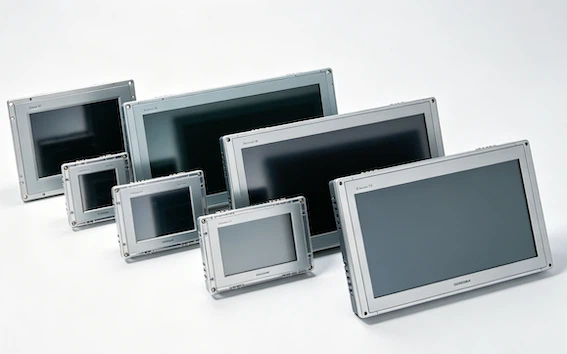
Resolution adds its own layer. Higher resolution means finer pixels, more complicated driver ICs, and tighter manufacturing tolerances. A simple 3.5-inch 320×240 panel is worlds cheaper than a 10.1-inch 1920×1200 one, even before any custom work starts.
And if your size or aspect ratio is a bit "off-menu" - something the factories don't already run in high volume - you'll get hit with custom glass tooling. That adds real money and extra lead time. The smartest move is almost always to design around standard TFT LCD sizes whenever you can. It's one of the easiest ways to keep custom industrial display cost under control.
High Brightness Requirements
High brightness is probably the place where costs can jump the most dramatically, and it's also where a lot of buyers get surprised.

Standard panels usually ship at 250–400 nits. That's fine for an office or indoor kiosk. But industrial and outdoor applications often need 800 nits for bright factories, 1000 nits for direct sunlight readability, or 1200–1500+ nits for high-glare outdoor terminals and mission-critical gear.
To get there, the entire backlight module has to be re-engineered: more LEDs, a custom light guide plate, upgraded optical films, and proper thermal management so the LEDs don't burn out. Every one of those changes adds material and engineering cost.
If your display is going outside - think EV charging stations, factory floor kiosks, or field service tablets - sunlight-readable performance isn't optional. The extra custom high brightness LCD cost is what actually makes the product usable in real-world conditions.
Touch Panel Integration
Touch is another area where custom TFT LCD cost can move around quite a bit depending on what you choose.

Resistive touch is still the budget-friendly option. It works with gloves, styluses, and rough use, which is why it's common in heavy industrial environments. The trade-off is lower clarity and single-touch only.
Projected capacitive (PCAP) touch feels modern and responsive - multi-touch, glass surface, great sensitivity. It costs more because the sensor layer and controller are more sophisticated, but these days it's what most people expect on industrial HMIs.
Then there's optical bonding - gluing the touch panel directly to the LCD with clear adhesive. It kills the air gap, reduces reflections, boosts contrast in bright light, and makes the whole assembly much tougher. It adds cost, but for any high-brightness or outdoor project it's usually money well spent.
Custom Backlight Design and Tooling Cost
For most custom industrial display projects, the backlight isn't an off-the-shelf part - it has to be designed specifically for your brightness target, size, and thermal needs. That work creates the backlight tooling cost, which often becomes one of the larger line items on the quote.

Tooling covers things like the precision mold for the light guide plate, the LED strip layout, the exact stack of optical films, the housing structure, and all the validation testing to make sure brightness and uniformity are spot-on.
Here's the good news: it's a one-time fee. You pay it once during development. Future production orders don't get charged for it again. So while it feels expensive on a small first run, the per-unit impact drops quickly as volume increases - which is why long-lifecycle industrial projects end up spreading that cost very efficiently over time.
Interface and Driver Requirements
The electrical interface between the display and your host system matters more than most people expect. RGB, LVDS, MIPI DSI, SPI, HDMI - if your board already matches what the panel supports natively, there's no extra cost.
But if you need a bridge IC or a custom driver board, you'll pay for both the parts and the engineering time. Bringing up the interface requirement early in the conversation almost always saves money and headaches later.
Operating Temperature Requirements
Consumer panels are usually rated 0°C to 50°C. Industrial jobs regularly need -20°C to +70°C or even -30°C to +85°C.

Hitting those wider ranges means special liquid crystal materials, wider-temperature LEDs, and a lot more environmental testing. It costs more than standard commercial-grade parts, but for outdoor equipment, cold storage, vehicles, or foundries, it's the difference between a display that lasts years and one that fails in the field.
Minimum Order Quantity (MOQ)
MOQ has a direct impact on custom TFT LCD cost. Factories have the same fixed overhead whether you order 100 pieces or 5,000, so smaller runs mean higher unit prices.
A 100-piece MOQ is actually very practical for industrial projects - it lets you validate with real production parts and keep inventory risk low. Just be aware that the per-piece price at low volume will be higher. Sharing a realistic annual forecast (even if you place smaller releases) usually gets you better pricing from the supplier.
Additional Customization Factors
A few other details can nudge the final number:
- Anti-glare, anti-reflection, or anti-fingerprint coatings on the cover glass
- Custom FPC cable length, connector type, mounting holes, or bezel design
- Certification testing (CE, RoHS, REACH, etc.)
None of these are huge on their own, but they all stack up.
Typical Custom TFT LCD Cost Structure
Here's how a typical project usually breaks down on paper:
- Base LCD panel (size + resolution)
- Touch panel (resistive or PCAP, with or without optical bonding)
- High-brightness backlight (LEDs, light guide, films)
- Backlight tooling (one-time)
- Engineering/NRE (interface, drivers, FPC design)
- Testing & qualification (temperature, brightness, touch performance)
Seeing which costs are one-time versus recurring makes it much easier to build a realistic project budget.
How to Keep Custom TFT LCD Cost Reasonable
If you want to control custom industrial display cost without sacrificing performance, these practical steps actually work in the real world:
- Start with a standard panel size whenever possible
- Only spec the brightness level your application truly needs
- Match your host interface to common standards (LVDS, MIPI, RGB)
- Lock the full specification early - late changes are expensive
- Ask the supplier if they already have a backlight platform close to your requirements
- Commit to realistic annual volume even if you order in smaller batches
Why Work With Minghua Display for Custom TFT LCD


At Minghua Display we've built our whole business around exactly these kinds of industrial, medical, outdoor, and commercial projects. We offer custom high brightness TFT LCD up to 1500 nits and beyond, low MOQ starting at just 100 pieces, full resistive/PCAP/optically bonded touch solutions, and complete engineering support from the first spec review all the way through mass production. We also provide long-term supply commitments and very transparent NRE and tooling breakdowns so there are never any hidden surprises.
Conclusion
Custom TFT LCD cost comes down to the combination of panel size, resolution, brightness level, touch choice, backlight tooling, interface, temperature range, and order volume. Understand those factors before you freeze the spec and you'll be able to make smart trade-offs instead of getting hit with unexpected costs halfway through engineering.
The biggest advantage you can give yourself is working with a supplier who's upfront about pricing, offers real engineering guidance, and is flexible on MOQ. That combination is still the most reliable way to land a solid custom industrial display cost that actually fits your project - and gets the job done in the field for years to come.
If you're working on a new display project right now, feel free to reach out to the Minghua team. We'll review your requirements and give you a clear, honest custom TFT LCD price breakdown with no pressure and no hidden fees. Many of our long-term industrial customers tell us that's exactly what made the difference on their projects.


