

If you're working on a project that needs a custom LCD-maybe a specialized TFT screen, a segment-based LCD module, or something more unique-getting the specs right from the start is everything. Many teams learn this the hard way: one small oversight in the initial RFQ, and you're suddenly dealing with weeks of revisions, extra tooling costs, and delayed prototypes.
Experienced LCD manufacturers see the same issues over and over. To help avoid them, here's a practical rundown of the 12 most critical parameters that should be clearly defined before you even send your first inquiry. Nail these, and your communication with suppliers becomes much smoother and cheaper.
- Display Size and Shape
This is the foundation. Define the exact active area (AA) size, overall outer dimensions (OD), and any special requirements like bar-type stretched formats, circular cutouts, rounded corners, or fully custom contours. Tolerances are usually ±0.1–0.2 mm for precision fit in enclosures-get this wrong, and mechanical redesigns follow.
- Display Type / Technology
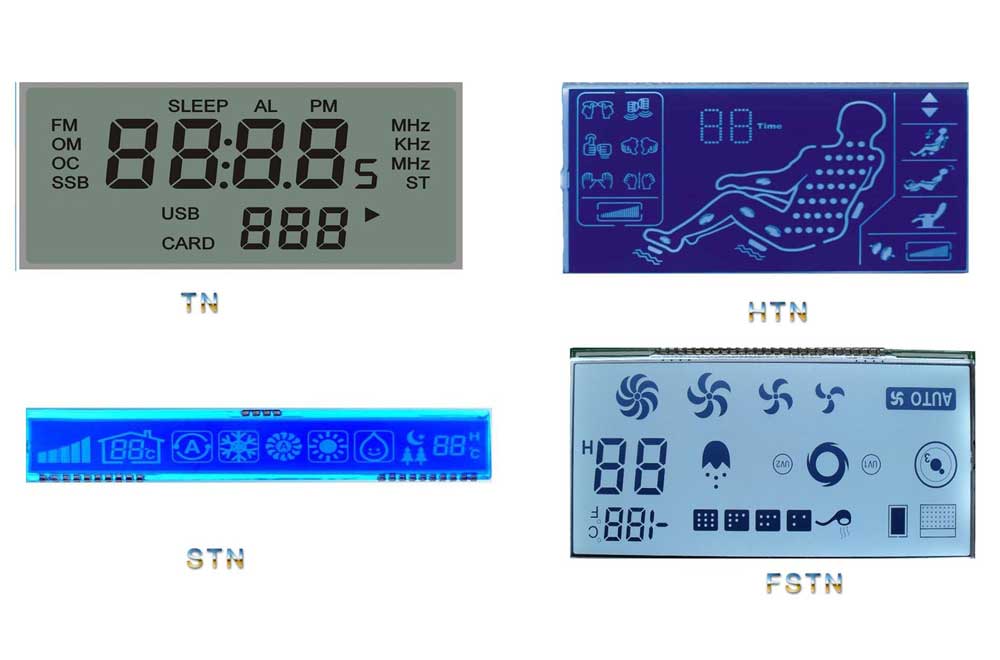
Choose based on performance needs and budget. Basic TN is cheap with fast response but poor viewing angles. HTN or STN offers better contrast for segment displays. VA gives deeper blacks, while full-color TFT screens (often IPS) deliver wide angles and vibrant visuals. Decide between reflective (no backlight, great for sunlight), transflective (hybrid), or transmissive modes early-switching later is expensive.

- Resolution and Pixel / Segment Layout
For graphic TFT screens, specify pixel count (e.g., 480×272 or 800×480). For character or segment LCD modules, detail every digit, icon, bar, or custom symbol precisely-including segment count and arrangement. Higher resolution drives up cost, power, and complexity, so match it to actual readability requirements.
- Interface and FPC Design
Pick the right communication protocol: SPI, I2C, parallel MCU, RGB, MIPI, etc. Specify pin count, pitch, FPC length, bending direction, reinforcement type (stiffener), and connector style (ZIF, COG, COB). A mismatch forces hardware changes on your side.
- Operating and Storage Temperature Range
Standard commercial range is 0°C to 50°C, but many applications need industrial (-20°C to 70°C) or wider extremes. Wide-temperature LCD modules use special liquid crystal materials and compensation circuits-essential for outdoor, automotive, or industrial use to prevent ghosting, slow response, or failure.
- Backlight Type and Brightness
Side-lit LED is most common for uniformity; direct-lit for higher brightness. Target nits matter: 200–400 for indoor, 800–1500+ for sunlight-readable. Consider color temperature, PWM dimming, and whether the backlight needs to be always-on or power-optimized.
- Touch Functionality (If Required)
Resistive touch is simple and cheap but less durable. Projected capacitive (PCAP) offers multi-touch and better feel but adds cost and thickness. Decide if touch is integrated (on-cell/in-cell) or separate, and specify the controller IC.
- Surface Treatment and Cover Lens
Add anti-glare (AG) to reduce reflections, anti-reflective (AR) coatings for clarity, anti-fingerprint (AF), or hard coatings for scratch resistance. For premium looks, include tempered glass or 3D curved cover lenses-these impact optical performance and assembly complexity.
- Viewing Direction / Angle
Segment and character LCDs are directional (typically 6 o'clock or 12 o'clock best view). TFT screens can be wide-angle IPS. Specifying the primary viewing orientation prevents washed-out appearance from off-axis angles.
- Driver IC and Power Supply Voltage
Name preferred driver IC families if you have constraints (compatibility, availability). Define supply voltage (commonly 3.3V or 5V) and any built-in controller requirements. This ties directly into your system's power design.
- Power Consumption Targets
Critical for battery devices. Segment LCD modules and reflective/MIP types excel in ultra-low power. Backlight usually dominates draw-factor it separately and set realistic targets to guide material choices.
- Mechanical and Environmental Extras
Include bezel color/thickness, mounting holes/tabs, IP rating for ingress protection, vibration/shock specs, expected lifetime (hours/MTBF), and certifications (RoHS, REACH, UL). These details prevent surprises during qualification.
Locking in these parameters upfront can cut revision cycles dramatically-often saving 30% or more in time and engineering fees when dealing with LCD manufacturers.
If you're ready to move forward with a custom LCD project-whether it's a simple segment display, a high-brightness TFT screen, or a full LCD module assembly-Minghua Display specializes in exactly this. As dedicated LCD manufacturers, we offer end-to-end support for custom LCD modules, TFT screens, and tailored display solutions, from low-MOQ prototypes to high-volume production. Send over your requirements, and our team will provide quick, competitive quotes and expert guidance to get your product to market faster.


