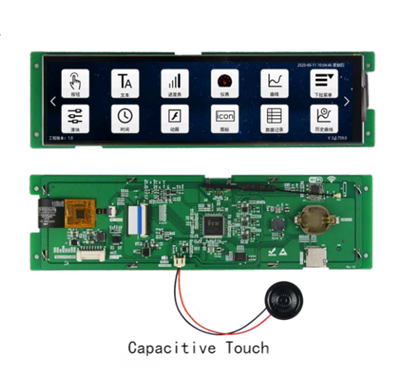
As a supplier of 15-inch UART screens, I often get asked about the types of data that can be transmitted through these remarkable display devices. UART, or Universal Asynchronous Receiver-Transmitter, is a hardware communication protocol that has been widely used for decades due to its simplicity and reliability. In this blog post, I'll explore the various kinds of data that can be sent through a 15-inch UART screen, and how this flexibility makes it a great choice for a wide range of applications.
Basic Data Types
Textual Data
One of the most common types of data transmitted through a 15-inch UART screen is text. Whether it's simple status messages, user instructions, or detailed reports, text can be easily sent and displayed. For example, in an industrial control system, a UART screen can show real-time status information such as temperature readings, pressure levels, and machine operation modes. The screen can also display error messages or alerts to notify operators of any issues.
In a point-of-sale (POS) system, text data can be used to show product names, prices, and transaction details. This makes it easy for customers to view and understand the information, enhancing the overall user experience. The 15-inch size provides ample space to display a significant amount of text clearly, ensuring that users can read the information without any difficulty.
Numeric Data
Numeric data is another important type that can be transmitted. This includes integers, floating-point numbers, and currency values. In a financial application, a 15-inch UART screen can display account balances, transaction amounts, and interest rates. In a scientific or engineering setting, it can show measurements such as voltage, current, and frequency.
The ability to display numeric data accurately is crucial in many applications. The UART protocol ensures that the data is transmitted without errors, and the high-resolution 15-inch screen can present the numbers clearly, making it easy for users to interpret the information.
Alphanumeric Data
Alphanumeric data combines both text and numbers. This type of data is commonly used in applications where a combination of identification and numerical values is required. For example, in a shipping and logistics system, a UART screen can display package tracking numbers, shipping dates, and delivery status. In a healthcare setting, it can show patient IDs, vital signs, and medication dosages.
The 15-inch UART screen can handle alphanumeric data efficiently, allowing for clear and organized display. This helps in reducing errors and improving the overall efficiency of the system.
Multimedia Data
Images
Although UART is primarily designed for serial data transmission, with the right encoding and buffering techniques, it is possible to transmit and display images on a 15-inch UART screen. Images can be used to enhance the visual appeal of the display and provide additional information. For example, in a kiosk application, an image of a product can be shown along with its description and price.
The size of the 15-inch screen allows for a decent-sized image to be displayed, making it suitable for applications where visual representation is important. However, transmitting images requires more bandwidth and processing power compared to text or numeric data, so it's important to optimize the image size and format for efficient transmission.
Graphics
Graphics data, such as charts, graphs, and diagrams, can also be transmitted through a 15-inch UART screen. In a business analytics application, a line graph can be used to show sales trends over time. In a manufacturing process, a flow chart can be displayed to illustrate the production steps.

The high-resolution of the 15-inch screen ensures that the graphics are sharp and clear, making it easy for users to analyze the information. The UART protocol can handle the transmission of graphics data by breaking it down into smaller packets and sending them sequentially.

Sensor Data
Environmental Data
15-inch UART screens can be used to display environmental sensor data. This includes data such as temperature, humidity, air quality, and light intensity. In a smart home application, the screen can show the current temperature and humidity levels in different rooms, allowing users to adjust the settings accordingly.
In an industrial environment, environmental sensor data can be crucial for ensuring the safety and efficiency of the operations. The UART screen can provide real-time monitoring of the environmental conditions, alerting the operators if any parameters exceed the normal range.

Motion and Position Data
Motion and position sensors can also be connected to a 15-inch UART screen. In a robotics application, the screen can display the position and orientation of the robot, as well as its movement speed. In a vehicle tracking system, it can show the location and speed of the vehicle.
The ability to display motion and position data on a large screen provides operators with a clear overview of the system's status, enabling them to make informed decisions.
Comparison with Other Screen Sizes
When considering a UART screen, it's important to compare the 15-inch size with other available options. For applications where space is limited, a 2.8 Inch UART Display might be a better choice. It is more compact and can be easily integrated into small devices. However, it has a smaller display area, which may limit the amount of data that can be shown.
On the other hand, if you need a larger display for more detailed information, a 12.1 inch UART screen or an 8 inch UART Display Screen could be considered. These screens offer a balance between size and functionality, and can be suitable for a wide range of applications.
Conclusion
In conclusion, a 15-inch UART screen is a versatile display device that can transmit a wide variety of data types. From basic text and numeric data to multimedia and sensor data, it can meet the needs of many different applications. The large screen size provides ample space for clear and detailed display, enhancing the user experience.
If you're interested in purchasing a 15-inch UART screen or have any questions about the data transmission capabilities, please feel free to contact us for a procurement discussion. We're here to help you find the best solution for your specific requirements.
References
- "UART Communication Basics" - Electronics Tutorials
- "Serial Communication Protocols" - IEEE Journal of Solid-State Circuits
- "Display Technologies and Applications" - Springer Handbook of Engineering
- "Sensor Data Acquisition and Processing" - Elsevier Sensors and Actuators Journal