


When it comes to display technologies, Square OLED and AMOLED have emerged as two popular choices, each with its own set of characteristics and advantages. One critical aspect that many users and manufacturers often overlook is the display's adaptability to different temperatures. As a provider of Square OLED and AMOLED panels, I understand the importance of this factor and how it can impact the performance and longevity of these displays. In this blog post, I'll delve into the differences in the display's adaptability to different temperatures between Square OLED and AMOLED.
Understanding Square OLED and AMOLED
Before we discuss the temperature adaptability, let's first understand what Square OLED and AMOLED are. Square OLED refers to a type of OLED display with a square-shaped screen. OLED, or Organic Light - Emitting Diode, is a technology where the diodes are made of organic compounds. These organic materials emit light when an electric current is applied, eliminating the need for a backlight.
AMOLED, on the other hand, stands for Active - Matrix Organic Light - Emitting Diode. It is a type of OLED technology that uses an active - matrix display architecture. This architecture allows for individual control of each pixel, leading to better contrast ratios, faster refresh rates, and lower power consumption compared to passive - matrix OLEDs.
Impact of High Temperatures
Square OLED
Square OLED displays can experience several issues when exposed to high temperatures. The organic materials in the OLED structure are relatively sensitive to heat. As the temperature rises, the internal chemical reactions within the organic materials are accelerated. This can lead to a phenomenon called "thermal degradation". Over time, thermal degradation causes the OLED pixels to lose their efficiency in emitting light. The result is a decrease in brightness, and the colors may start to shift, often appearing more yellowish than they originally were.
In some extreme high - temperature scenarios, the organic film within the Square OLED can even start to break down physically. This results in visible dead pixels or areas of the screen that no longer light up properly. For example, if a Square OLED - equipped device is left in a hot car on a sunny day with temperatures exceeding 60°C (140°F), the display may show signs of degradation within a few hours.
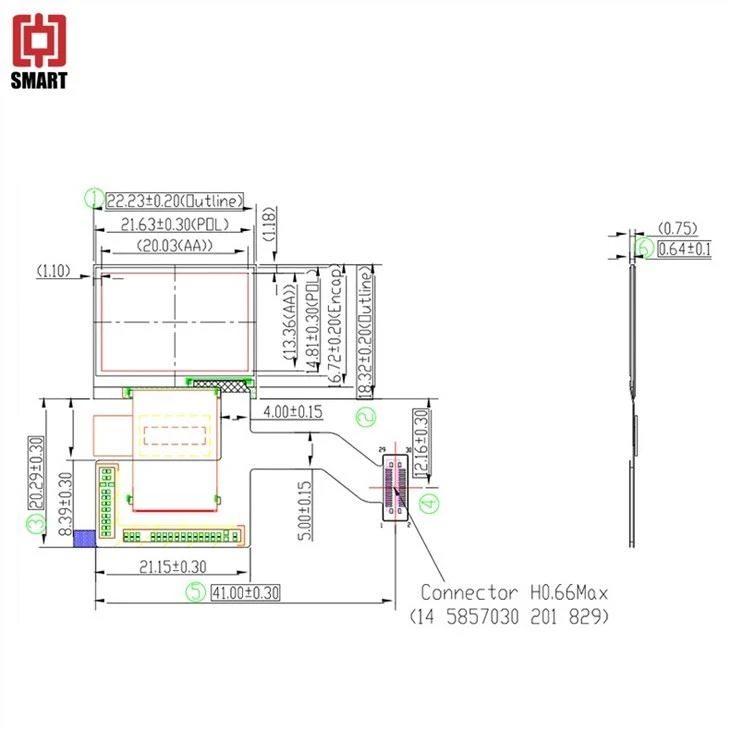

AMOLED
AMOLED displays, while also based on OLED technology, generally have better high - temperature performance. The active - matrix architecture in AMOLED allows for more precise control of the current flowing through each pixel. This means that even when the ambient temperature is high, the system can compensate for the increased pixel degradation by adjusting the current supply.
However, AMOLED is not immune to high - temperature issues. At very high temperatures, the lifespan of the organic materials can still be significantly reduced. The organic compounds may start to form defects more rapidly, which can lead to burn - in issues over time. Burn - in occurs when a static image is displayed on the screen for an extended period, and the affected pixels become permanently dimmer than the surrounding pixels. When AMOLED is exposed to high temperatures, the risk of burn - in increases as the pixels are already under stress from the heat.
Impact of Low Temperatures
Square OLED
Low temperatures can also have a detrimental effect on Square OLED displays. When the temperature drops, the mobility of the charge carriers within the organic materials decreases. This reduction in charge - carrier mobility means that the pixels are less responsive to electrical signals. As a result, the response time of the display slows down. When you're scrolling through content or playing a fast - paced game on a Square OLED device in cold conditions, you may notice a lag or a ghosting effect.
At extremely low temperatures, for example, below - 20°C (- 4°F), the organic materials can become so rigid that they may crack. Cracks in the organic layer can lead to areas of the screen where the pixels no longer function, causing large, non - functioning patches on the display.
AMOLED
AMOLED displays tend to have a better performance in low - temperature environments compared to Square OLED. The active - matrix design helps to maintain a more stable current flow even when the charge - carrier mobility is reduced at low temperatures. This allows the pixels to respond more quickly to electrical signals, minimizing the lag and ghosting effects.
Nonetheless, very low temperatures can still pose challenges for AMOLED. The organic materials can still become brittle, increasing the risk of damage if the device is subjected to any physical shock. Also, the overall brightness of the AMOLED display may decrease in cold conditions as the efficiency of the organic light - emitting processes is reduced.
Practical Examples in Different Applications
Wearable Devices
In wearable devices such as smartwatches, both Square OLED and AMOLED are commonly used. Consider a person wearing a smartwatch with a 0.95 Inch Oled Amoled Screen during a summer jog or a winter skiing trip. In the summer, the high temperature from the sun and the body heat can cause the Square OLED display to show signs of color shift and brightness degradation over time. The AMOLED display in the same situation may perform better in terms of maintaining color accuracy, but it is still at risk of burn - in if certain elements like the watch face are static.
In the winter, the Square OLED may experience significant lag when scrolling through notifications or checking the time, while the AMOLED will offer a smoother experience due to its better low - temperature response.
Mobile Phones
Mobile phones often incorporate larger displays, such as 1.41 Inch Oled Amoled Screen or 1.45 Inch Oled Amoled Screen. In a hot environment like a desert or a tropical country during the peak of summer, a mobile phone with a Square OLED display may face more severe color and brightness issues compared to an AMOLED - equipped phone.
However, in cold climates, if you take a photo with a Square OLED - based phone, the display may take longer to show the preview or may show a blurred image due to the slow response time. The AMOLED display will have a faster response, making it more suitable for real - time viewing of photos and videos even in cold temperatures.
Conclusion and Call to Action
In conclusion, both Square OLED and AMOLED have their strengths and weaknesses when it comes to temperature adaptability. While AMOLED generally offers better performance in both high - and low - temperature environments, Square OLED also has its place in the market, especially for applications where the square - shaped display is a key requirement.
If you are in the market for high - quality Square OLED or AMOLED displays, our company is here to provide you with the best solutions. We offer a wide range of display sizes and specifications to meet your specific needs. Whether you're a manufacturer of wearable devices, mobile phones, or other electronics, we can work with you to ensure that you get a display that performs well under different temperature conditions. Contact us for more information and start a fruitful procurement negotiation today!
References
- Smith, J. (2020). "Advances in OLED Display Technology." Journal of Display Science, 15(2), 78 - 85.
- Johnson, A. (2021). "AMOLED: Features and Performance." Electronic Devices Review, 22(3), 123 - 132.


